

Diseases
- Endometriosis
- Adenomyosis Treatment in Indore
- Endometriosis in Teenagers
- Inguinal Endometriosis Treatment
- Umbilical Endometriosis Treatment
- Scar Endometriosis Treatment
- Ureteral Endometriosis Treatment
- Ovarian Endometriosis Treatment
- Bowel Endometriosis Treatment
- Bladder Endometriosis Treatment
- Deep Infiltrating Endometriosis Treatment
Make an Appointment
Schedule your visit with Indore’s endometriosis expert.
Working Hour
- 9:00-19:00
- 9:00-19:00
- 9:00-19:00
- 9:00-19:00
- 9:00-19:00
- 9:00-19:00
- Closed
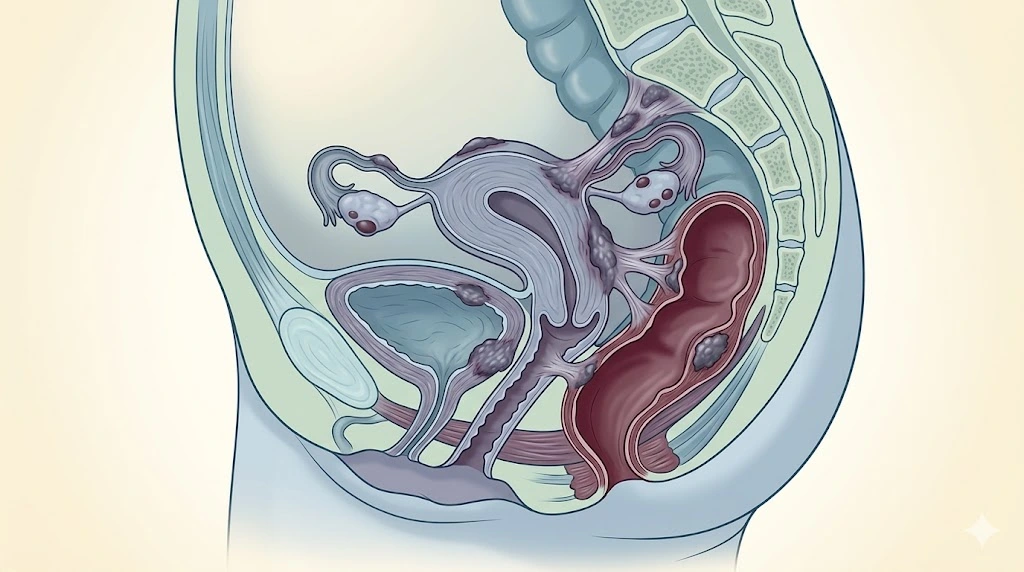
What is Deep Infiltration Endometriosis?
Deep infiltrating endometriosis (DIE) is a severe and complicated form of endometriosis. The tissue growth gets deeper into more than 5 mm and penetrates other organs like the bowel, urinary bladder beyond the uterus walls. It causes intense pain. Globally, around 1 in 6 women as per WHO, may have endometriosis. Of these, 40% have DIE. And it severely impacts the quality of life as well as fertility in women.
Deep Infiltrating Endometriosis Symptoms
DIE means endometriosis has spread deep into organs like the bladder or bowel. It causes pain that isn’t normal period pain. This pain affects daily life and doesn’t go away after the menses. It’s often missed or mistaken, so knowing symptoms of deep endometriosis early helps in getting proper treatment.
Key Symptoms of DIE Endometriosis
What Causes or Creates the Risk towards Deep Infiltrating Endometriosis (DIE)?
The exact cause of endometriosis not clear, but it may happen when period blood flows backward through the uterus and fallopian tubes into the pelvic cavity. Family history, early periods, heavy bleeding or infertility increase the risk. Female hormones shoot up (especially estrogen) and may also worsen symptoms of deep endometriosis as well as propel the tissue growth deep inside organs.
How Deep Endometriosis (DIE) is Diagnosed?
DIE can be seen easily via a simple ultrasound but by an expert trained in diagnosing and mapping endometriosis. Some centres may get a MRI for the same. These tests help confirm where and how deep it is.
Main Diagnostic Tests:
How Deep Infiltrating Endometriosis is Treated?
DIE treatment needs laparoscopic excision of endometriotic tissue, where deep tissue is removed surgically. Hormonal therapy may reduce pain and temporarily halt the growth. Surgery is preferred if organs like bowel, bladder, or uterus are affected, especially when fertility is also impacted.
If you are struggling with persistent pelvic pain, consulting a specialist for deep infiltrating endometriosis treatment in Indore can help you regain control over your health and quality of life.