

“Why am I facing period problems and difficulty getting pregnant?”
“Is it endometriosis or PMOS?”
If you have this question, you are not alone. Many women confuse endometriosis and PMOS (formerly PCOS), because both conditions can affect their periods, fertility, and overall reproductive health.
But not every painful period indicates you have endometriosis. Also, not every irregular period means PMOS. Then how do you know whether it’s endometriosis or PMOS?
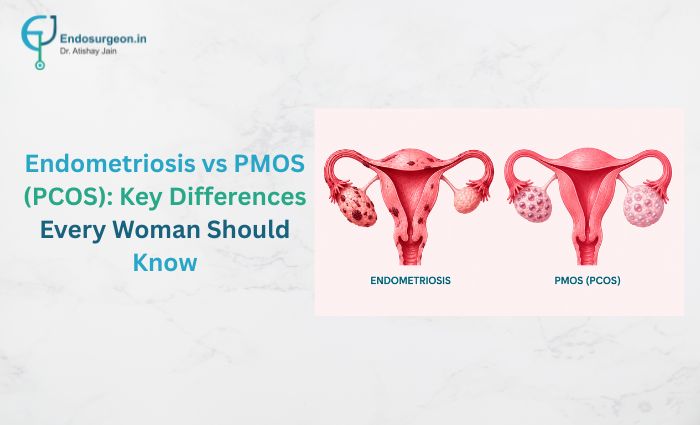
Generally, we see that if you have endometriosis, your symptoms are pain-related, while in PMOS, this is linked to irregular ovulation or hormonal imbalance. In this article, we answer all your questions related to how they differ, how they impact your fertility and treatment options.
Understanding Endometriosis — What Happens in the Body
In endometriosis, tissue similar to the lining that is found inside your uterus is present outside of your uterus.
According to the World Health Organization (WHO), around 10% (190 million) of women and girls of reproductive age worldwide have endometriosis.
Endometriosis can occur in your ovaries, the fallopian tubes or the pelvic lining. Just like the tissue in your uterus, it undergoes changes every month because of the hormones. However, because the blood cannot leave your body, it can cause inflammation, scar tissue, adhesions, and chronic pelvic pain.
Understanding PMOS (PCOS) — A Hormonal and Metabolic Condition
PMOS, or Polyendocrine Metabolic Ovarian Syndrome, is more than just an ovarian condition. It is a metabolic and hormonal disorder that affects how the body functions.
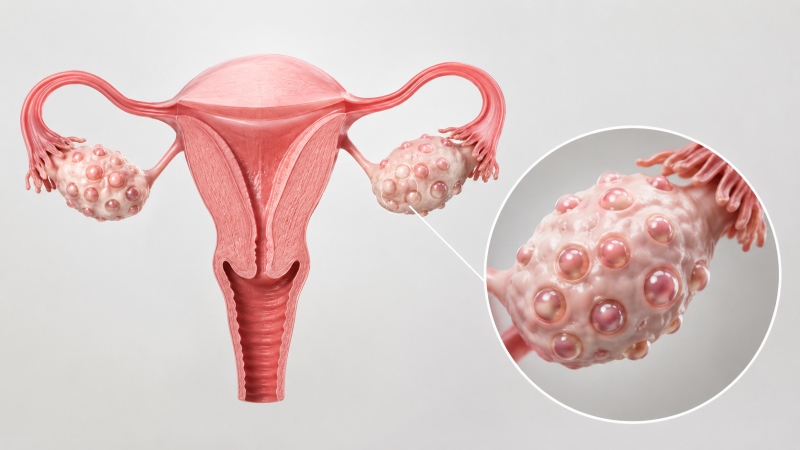
According to the 2023 International Evidence-based Guideline for PCOS, the condition affects approximately 8-13% of women of reproductive age.
If you have PMOS, you probably suffer from insulin resistance, hormonal imbalance, and elevated androgen levels, thus affecting the normal process of ovulation and creating ovulatory dysfunction. As a result, your periods become irregular, and you face difficulty conceiving.
Symptom Differences Between Endometriosis and PMOS:
When our patients come to us with complaints of heavy bleeding during periods and difficulty in pregnancy, we do not rush into a diagnosis. Our first goal is to understand their symptoms in detail because both can happen with endometriosis or PMOS.
Let’s look at endometriosis and PMOS symptoms:
| Endometriosis | PMOS |
| Intensely painful menstruation | Irregular or absent periods |
| Heavy menstrual flow | Unusual bleeding (occasionally) |
| Pelvic pain | Difficult ovulation |
| Back pain during menstruation | Dark, thickened skin patches (acanthosis nigricans) |
| Pain during or after intercourse | Excessive growth of hair on the face or body (hirsutism) |
| Painful bowel movements, particularly during menstruation | Acne and oiliness of the skin |
| Pain during urination during menstruation | Hair loss or thinning of the scalp hair |
| Digestive problems like bloating, constipation or diarrhoea | Weight gain and inability to lose weight |
| Difficulty becoming pregnant | Inability to conceive |
Quick Symptom Check — Which One Fits You?
Not sure where to start? Use this as a rough guide, not a diagnosis:
- Periods come on time but hurt severely → more likely endometriosis
- Periods are late, skipped, or unpredictable → more likely PMOS
- Pain during intercourse or bowel movements → more likely endometriosis
- Acne, excess facial/body hair, or weight gain → more likely PMOS
- Trying to conceive with regular ovulation but no success → investigate endometriosis
- Trying to conceive with irregular or absent ovulation → investigate PMOS
If you’re checking boxes on both sides, that’s a valid reason to get tested for both conditions rather than guessing.
How Symptoms Show Up at Different Ages:
- Teens (13–19): Endometriosis is often dismissed as “normal period pain” at this age, delaying diagnosis by years. PMOS can also appear early, usually as irregular periods, acne, or early weight gain — but doctors are often cautious about diagnosing PMOS too soon, since irregular cycles are common in the first 1–2 years after a first period.
- 20s–30s: This is when both conditions are most likely to be investigated seriously, usually because of fertility concerns. Symptoms tend to be clearer, and diagnostic tests are more reliable.
- Perimenopause (40s+): Endometriosis symptoms often ease as estrogen drops, though they don’t disappear for everyone. PMOS symptoms shift too — the fertility struggle becomes less relevant, but metabolic risks (diabetes, heart disease) become the bigger long-term concern.
What Causes Endometriosis and What Causes PMOS:
One of the first things we explain to our patients is that endometriosis and PMOS do not have the same cause. In many women, more than one factor may be involved.
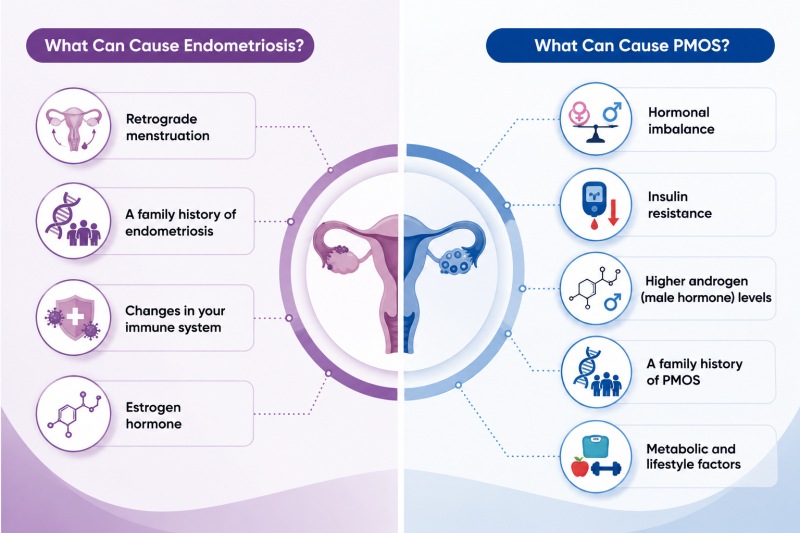
Understanding the possible cause helps us choose the right treatment for you.
What Can Cause Endometriosis?
Endometriosis may be linked to:
- Retrograde menstruation
- A family history of endometriosis
- Changes in your immune system
- Estrogen hormone
What Can Cause PMOS?
PMOS is commonly linked to:
- Hormonal imbalance
- Insulin resistance
- Higher androgen (male hormone) levels
- A family history of PMOS
- Metabolic and lifestyle factors
Diagnosing Endometriosis and PMOS — What Tests Are Used
Most women believe that there is one single test available for confirmation of either endometriosis or PMOS; however, this may not always be true. For both, we first discuss your symptoms and menstrual history.
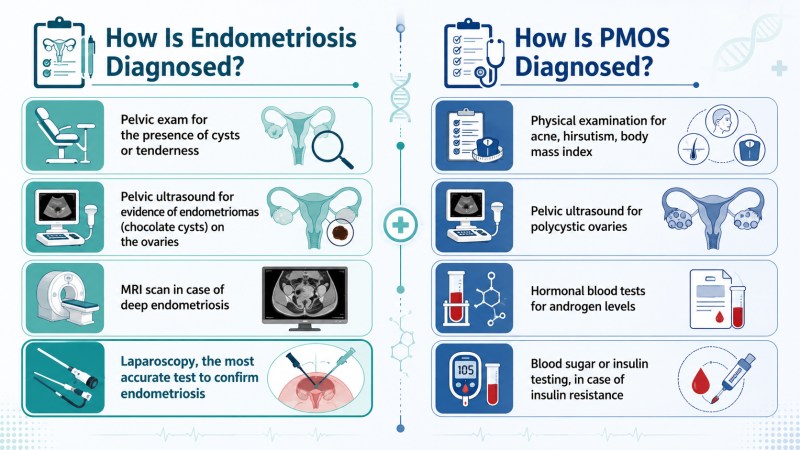
PMOS & endometriosis diagnosis is as below:
How Is Endometriosis Diagnosed?
- Pelvic exam for the presence of cysts or tenderness
- Pelvic ultrasound for evidence of endometriomas (chocolate cysts) on the ovaries
- MRI scan in case of deep endometriosis
- Laparoscopy, the most accurate test to confirm endometriosis
How Is PMOS Diagnosed?
- Physical examination for acne, hirsutism, body mass index
- Pelvic ultrasound for polycystic ovaries
- Hormonal blood tests for androgen levels
- Blood sugar or insulin testing, in case of insulin resistance
Why Diagnosis Often Takes So Long:
It’s common — and frustrating — for women to see two or three doctors before getting a clear answer. A few honest reasons why:
- Symptoms overlap heavily with other conditions (thyroid disorders, fibroids, IBS), so doctors often rule those out first.
- Period pain is still frequently dismissed as “normal,” delaying endometriosis workups by years in many cases.
- PMOS has no single confirmatory test — diagnosis relies on a combination of symptoms, blood work, and ultrasound findings, which takes time to piece together.
If your symptoms have gone unexplained for months, that’s a reasonable point to ask directly for a referral to a specialist rather than continuing general consultations.
Not Endometriosis or PMOS? Other Conditions With Similar Symptoms
- Fibroids: Non-cancerous growths in the uterus that can cause heavy bleeding and pelvic pressure, but don’t typically cause the ovulation problems seen in PMOS.
- Adenomyosis: Similar to endometriosis but the tissue grows into the uterine wall itself, often causing heavy, painful periods and an enlarged uterus.
- Thyroid disorders: Both an underactive and overactive thyroid can cause irregular periods that mimic PMOS.
If your symptoms don’t fully resolve with treatment for endometriosis or PMOS, these are worth ruling out.
How Endometriosis and PMOS Affect Your Ability to Conceive?
Both conditions may impact your fertility in different ways:
Endometriosis:
In case of endometriosis, it may be challenging for you to conceive, as the disease leads to inflammation and the development of scars that may impact the functionality of your ovaries, fallopian tubes or the movement of the egg or sperm.
According to the American Society for Reproductive Medicine (ASRM) Committee Opinion, 30-50% of women with endometriosis experience infertility, making it one of the leading causes of female infertility.
PMOS:
When you are suffering from PMOS, the main problem is related to irregular or absent ovulation. When you do not produce eggs, conception may become difficult.
According to the American Society for Reproductive Medicine (ASRM) Committee Opinion (2021), ovulatory dysfunction accounts for up to 40% of female infertility, and PMOS is the most common cause of ovulatory dysfunction.
What the Fertility Treatment Journey Actually Looks Like
For PMOS: Treatment usually starts with lifestyle changes and ovulation-inducing medication (like letrozole or clomiphene). If that doesn’t work after several cycles, doctors may move to IUI (intrauterine insemination), and IVF is considered if IUI isn’t successful after a few attempts. Many women conceive at the medication or IUI stage without needing IVF.
For Endometriosis: Mild cases may respond to surgery to remove endometrial tissue, followed by natural conception attempts. Moderate to severe cases, especially with scarring or blocked tubes, often move to IVF sooner, since surgery alone may not restore fertility. Timelines vary widely depending on severity.
In both cases, treatment is usually staged — starting with the least invasive option and escalating only if needed, rather than jumping straight to IVF.
Can You Have Both Endometriosis and PMOS Together?
Yes, endometriosis and PMOS can occur together, but it is rare.
In 2023, a study published in the American Journal of Obstetrics & Gynaecology Global Reports (AJOG Global Reports) revealed that about 1 in 20 women (5%) undergoing gynaecological surgery had both endometriosis and PMOS. For the general population, it was about 2% (1 out of 50). It was also revealed that females with both conditions were 10 times more prone to infertility than those without both conditions.
If your symptoms cannot be explained by one condition only, we might suggest conducting tests for both conditions to come up with an accurate diagnosis and treatment plan.
Treatment Options for Endometriosis and PMOS

The table below shows treatment options for endometriosis and PMOS:
| Endometriosis | PMOS |
| Medications that help reduce pain | Healthy lifestyle habits (healthy eating and exercising) |
| Hormone treatment | Period-regulating medication |
| Surgical intervention if necessary | Medications that help ovulation |
| Surgery for removing the endometriosis tissues | Insulin resistance treatment if necessary |
| Assisted Reproductive Technologies (ART) if pregnancy is difficult | Inducing ovulation or IVF if pregnancy is difficult |
Diet and Lifestyle: What Actually Helps
For PMOS:
- A lower-glycemic diet (fewer refined carbs, more fiber and protein) can help manage insulin resistance, which is often at the root of hormonal imbalance.
- Regular movement — even moderate activity like brisk walking — has been shown to improve insulin sensitivity and support more regular cycles.
- Weight change, even a modest 5–10%, can sometimes restore ovulation in women with PMOS, though this varies a lot person to person.
For Endometriosis:
- Some women find anti-inflammatory eating patterns (more omega-3s, fewer processed foods) help with pain, though evidence is still developing and it isn’t a substitute for treatment.
- Gentle exercise and pelvic floor physiotherapy can help manage chronic pain for some patients.
- There’s no proven diet that reverses endometriosis — lifestyle changes support symptom management, not a cure.
When Should You Consult an Endometriosis Specialist?
You don’t have to live with severe period pain or keep wondering why pregnancy isn’t happening. If your symptoms continue month after month, Dr. Atishay Jain can help identify the underlying cause and recommend the most appropriate treatment for you.
You should see an endometriosis specialist if you have:
- Severe or worsening period pain
- Ongoing pelvic pain
- Pain during intercourse
- Heavy menstrual bleeding
- Difficulty getting pregnant
- Symptoms that do not improve with treatment
Final Takeaway — Know the Difference, Seek the Right Help
Endometriosis and PMOS may seem similar, but they are not the same condition. Knowing the difference can help you avoid delays in diagnosis and receive the treatment that is right for you. If you have ongoing symptoms or concerns about your fertility, don’t keep waiting. Speaking to the right specialist can help you move forward with confidence and the care you need.
FAQs:
Endometriosis occurs when uterine-like tissue grows outside the uterus, causing pain and inflammation, while PMOS (PCOS) is a hormonal and metabolic condition that disrupts ovulation. Endometriosis is mainly a pain disorder; PMOS is mainly an ovulation and hormone disorder.
Yes — in May 2026, PCOS (Polycystic Ovary Syndrome) was officially renamed to PMOS (Polyendocrine Metabolic Ovarian Syndrome) by a global coalition of medical bodies, including ASRM and the Endocrine Society, to better reflect its hormonal and metabolic nature. Both terms are currently used interchangeably during the transition period.
Yes, because PMOS often causes irregular or absent ovulation, which means eggs aren’t released consistently, making natural conception more difficult without treatment or ovulation induction.
Neither is universally “more serious” — endometriosis tends to cause more physical pain and can affect organs beyond the ovaries, while PCOS carries broader long-term metabolic risks like diabetes and heart disease. Severity depends on the individual case.
Yes, though it’s uncommon — around 7% of people with endometriosis also have PMOS. If your symptoms don’t fully match one condition, your doctor may test for both.
The best clue is your main symptom — PMOS usually shows up as irregular or missed periods, weight gain, acne, and excess hair growth, while endometriosis is marked by severe period pain, heavy bleeding, and pain during intercourse. A pelvic ultrasound and hormone blood test can help confirm PMOS, while endometriosis often requires laparoscopy for a definitive diagnosis.