

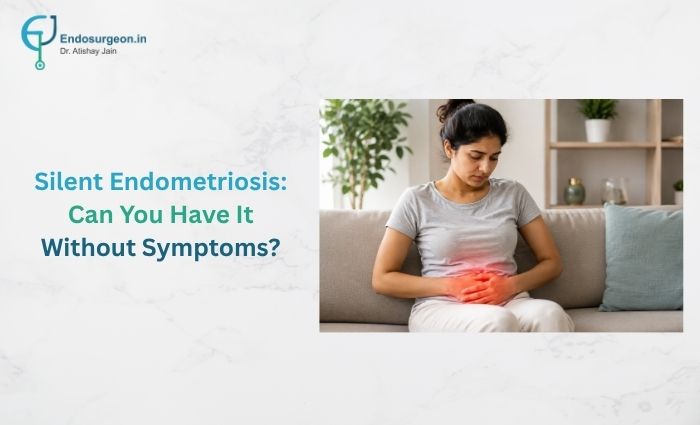

I remember a young woman who came for a consultation after months of trying to conceive. She had regular periods and no severe cramps. She felt there was nothing unusual about her cycle. So, when we diagnosed endometriosis during her evaluation, she was surprised because she had no pain.
- But does no pain mean there is no endometriosis?
- Can it affect your fertility without causing symptoms?
In some women, yes.
The absence of symptoms does not always tell us what is happening inside your pelvis. Let’s understand this lesser-known side of endometriosis called silent endometriosis.
What Is Silent Endometriosis?
In endometriosis, tissue similar to the lining of the uterus grows outside of your uterus, commonly affecting ovaries, fallopian tubes, and other parts of your pelvic region. This tissue responds to hormonal changes and, over time, can cause scars, inflammation, and adhesions.

In silent endometriosis, you may have endometriosis, but you have no symptoms or sometimes mild symptoms. Many women go through this condition, and most recognise it when they undergo any fertility treatment or any pelvic examination.
As per a 2021 study published in the Indian Journal of Medical Research found that 23% (nearly 1 in 4) women have endometriosis with no obvious signs.
“Having no symptoms does not always mean the condition is mild. The effect of endometriosis can be different for every woman.”
- Dr Atishay Jain, Endometriosis & Gynae Laparoscopy Specialist
Silent Endometriosis Symptoms and Subtle Signs:
These silent endometriosis symptoms can be so mild that they are easily overlooked. They may have normal periods and little or no pelvic pain, so you may not know that endometriosis is present.

You may notice small changes, such as:
- Occasional bloating
- Back discomfort
- Spotting
- Digestive symptoms
But these can easily be ignored. In other women, there may be no symptoms at all. Sometimes, the first sign is difficulty getting pregnant. This is why endometriosis can remain unnoticed for a long time.
Why Some Women Have Endometriosis Without Severe Pain?
There is no single reason why some women have little or no pain. Because pain can depend on where the endometriosis is, how your body responds to inflammation, and how pain signals are processed.
Here are some possible factors:
- Location: Lesions in the various parts of your pelvis may produce different effects. For example, a lesion near the bowel can cause bowel discomfort, and a lesion present near the ovaries can cause pelvic discomfort.
- Inflammation: More inflammation may result in more pain, but this is not necessarily true for everybody.
- Nerve sensitivity: Pain can be stronger when sensitive nerves are involved. For example, if the lesions are away from these nerves, you may have little or no pain.
- Hormonal factors: Hormone changes can affect endometriosis symptoms. For example, some symptoms may become more noticeable around the menstrual period.
No Pain Does Not Mean Mild Endometriosis:
Most people believe that more pain means more serious disease. But this is not really true. The stage of endometriosis and the pain you feel are two different things. One does not tell you about the other.
Doctors decide the stage of endometriosis (Stage 1 to Stage 4) by looking at how much tissue has grown, how deep it has gone, and where it is present. Pain level is not part of this decision. So a woman can have Stage 4 endometriosis — with cysts on both ovaries, adhesions sticking her pelvic organs together, and blocked tubes — and still say her only problem is mild bloating or slight back pain once in a while.
This is why we see many patients who remain undiagnosed for 5 to 10 years. It is not because anyone ignored their health. It is simply because everyone, including the patient, believed that no pain means nothing serious. By the time she comes for a fertility check-up, the disease has already had years to silently affect her ovaries or tubes.
So next time someone says, “Your periods are normal, so you must be fine” — do not take this too seriously. Normal periods and mild pain do not tell you how advanced the disease is inside.
How to Detect Silent Endometriosis?
Silent endometriosis can be difficult to identify because there may be few or no symptoms. We usually begin with your medical and fertility history, followed by a pelvic examination and imaging when needed.
A transvaginal ultrasound can help identify ovarian endometriomas and some deep endometriosis. An MRI may be useful when we need a clearer picture of deeper disease.
Laparoscopy is no longer used routinely just to diagnose every case. It may be considered when imaging is unclear, symptoms persist, or surgery is already being planned.
Can Silent Endometriosis Be Missed on Ultrasound or MRI?
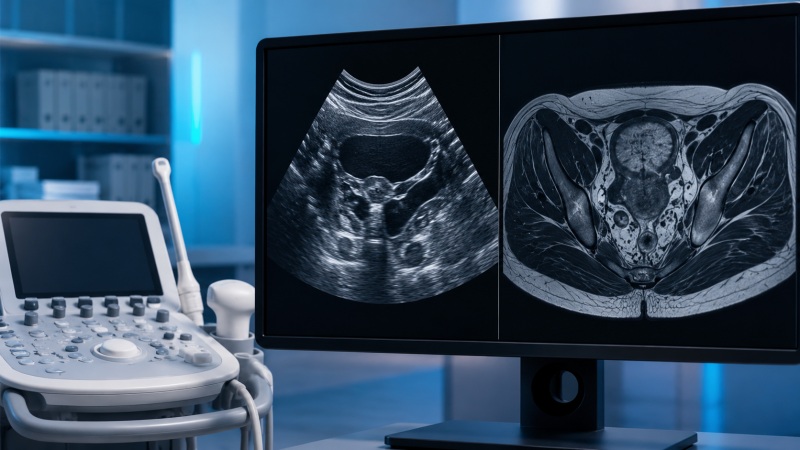
Many patients think a “normal” ultrasound or MRI means they definitely don’t have endometriosis. That’s not always true, and it’s important to understand why.
- Small lesions on the pelvic lining can be too tiny for a routine ultrasound to pick up.
- Some lesions are pale or clear in color instead of the usual dark “chocolate” shade. These are much harder to spot, even for a skilled sonologist.
- Deep lesions can hide behind organs or inside ligaments, where a standard scan simply cannot reach.
- MRI is better at finding deep disease and larger cysts, but even MRI misses some cases.
So if your ultrasound or MRI report says “normal,” it does not mean you are free of endometriosis. It only means nothing was visible in that particular scan. And in silent endometriosis, that happens quite often.
Blood and Tissue Tests That May Point to Silent Endometriosis:
| Marker | What it checks | What it tells you |
|---|---|---|
| CA-125 | A blood test for a protein linked to pelvic inflammation | Often raised when endometriomas are present, but it’s not specific — other conditions can raise it too, so it’s a clue, not a confirmation |
| BCL-6 (endometrial biopsy) | Checks for a protein tied to inflammation inside the uterine lining during a specific phase of the cycle | Raised levels point to progesterone resistance — a state where the uterine lining doesn’t respond properly to progesterone, which can disrupt embryo implantation even when everything else looks normal |
The BCL-6 test is less known in India compared to CA-125, but it’s becoming relevant for women going through repeated IVF failure or unexplained implantation failure with chromosomally normal embryos. It doesn’t replace laparoscopy, but for a woman with no pain, normal scans, and unexplained infertility, it can be the piece that finally points toward silent endometriosis as the cause.
Read Also: Endometriosis Laparoscopy: Procedure, Benefits & Recovery
Silent Endometriosis and Infertility:
Silent endometriosis can still be associated with fertility problems, even when symptoms are mild. The WHO reports that 25-50% of women with infertility may have endometriosis.
So, how might silent endometriosis affect fertility?
We may see several possible factors:
- Pelvic inflammation may affect your normal reproductive function.
- Scar tissue may affect your ovaries or fallopian tubes.
- Endometriosis around your ovaries may affect their function.
- Changes in your pelvic environment may sometimes affect embryo implantation.
We see this connection in unexplained infertility as well. A 2024 study of 1,707 women found endometriosis in 44% of women with unexplained infertility who underwent laparoscopy.
But does this mean you cannot become pregnant? Not at all. Many women with endometriosis conceive naturally or with appropriate fertility treatment.
Could Silent Endometriosis Cause Unexplained Infertility?
Doctors use the term “unexplained infertility” when all the usual tests come back normal, but the couple still isn’t getting pregnant. It’s not really a final diagnosis — think of it more like a label doctors use when they haven’t found the reason yet.
Usually, this means:
- Ovulation is happening on time, every month
- The husband’s semen report is normal
- Both fallopian tubes are open, no blockage
- Ovarian reserve (egg count) looks fine on reports
Even with all this normal, pregnancy still doesn’t happen. And this isn’t rare — around 15 to 30% of infertile couples worldwide get this “unexplained” label.
But here’s the important part: unexplained does not mean there is no cause. It simply means the cause hasn’t been found yet with the tests done so far. In many such cases, once the couple goes for a laparoscopy or a deeper evaluation, silent endometriosis turns out to be the hidden reason all along.
Read Also: Does Endometriosis Affect Pregnancy and Fertility? Everything You Need to Know
Silent Endometriosis Can Affect More Than Fertility:
Most of the talk around silent endometriosis is about fertility, and that makes sense, since that’s usually what brings women in. But endometriosis can quietly affect other organs too, and this part often doesn’t get talked about enough.
- Bowel: If the endometriosis tissue is growing near the bowel, it can cause constipation that comes and goes with your period, or sometimes even light bleeding from the rectum around that time. Most women (and even some doctors) mistake this for IBS and don’t think to connect it to endometriosis.
- Bladder: If it’s near the bladder, you may feel mild discomfort while urinating, or notice blood in urine. This too is often brushed off as a UTI, especially if it comes and goes.
- Ureters: This is rare, but it’s the one to take seriously. The ureter is the small tube that carries urine from your kidney down to your bladder. If endometriosis tissue slowly presses on this tube over time, it can affect how well your kidney works and the tricky part is, this can happen with zero pain. You may not feel anything at all until the damage is already done.
We’re not sharing this to scare you. We’re sharing it because it explains why “I don’t have pain, so I must be fine” is not always true. If you notice bowel or urinary symptoms that seem to show up or get worse specifically around your period, that pattern by itself is worth mentioning to your doctor — even if nothing feels seriously wrong.
How to Get Pregnant With Silent Endometriosis?
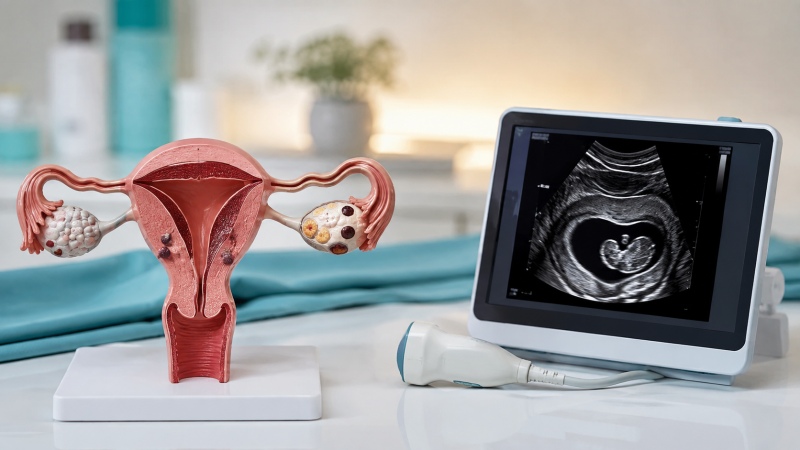
Can you get pregnant with silent endometriosis?
Yes, you can.
If you have endometriosis, that does not automatically mean that you may need surgery or IVF treatment in order to conceive.
- If you are younger and your fertility test is normal, natural pregnancy may be possible.
- Ovulation induction with IUI may be considered in selected women with early-stage disease.
- Surgery can be useful in selected women, especially when endometriosis affects the pelvic anatomy, causes severe pain, or involves an endometrioma.
- IVF may be considered when your tubes are affected, other fertility factors are present, or pregnancy has not occurred with other approaches.
Can Silent Endometriosis Affect Egg Quality?
Yes, silent endometriosis may impact the quality of your egg . However, it doesn’t mean that all women have poor-quality eggs.
According to a 2017 study, endometriosis impacts your egg quality through:
- Inflammation within your ovary.
- Impairment of egg maturation such that few eggs mature.
- Impairment of egg development that affects either fertilisation or embryo development.
- Impact of endometriosis on the ovaries when the disease impacts your ovarian tissue.
Can Silent Endometriosis Cause Miscarriage?
Silent endometriosis does not mean that you will have a miscarriage. Endometriosis has been associated with some pregnancy risks, but miscarriage can happen for many reasons, including chromosomal problems and maternal health factors.

If you become pregnant with endometriosis, we continue appropriate routine antenatal care. We may pay closer attention if you develop symptoms such as vaginal bleeding or abdominal pain, particularly in early pregnancy.
Silent Endometriosis Treatment Options:
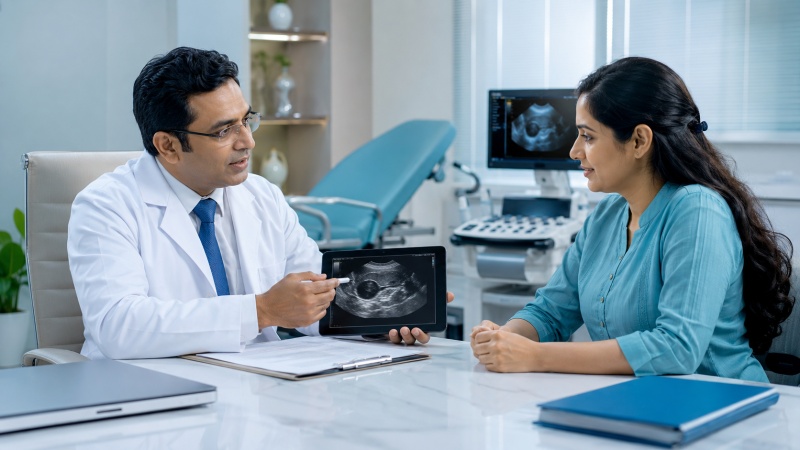
If endometriosis is found incidentally and you have no symptoms, immediate treatment may not be necessary. We may recommend follow-up rather than starting medication or surgery.
- Follow-up: Regular check-ups and scans may be enough when treatment is not needed.
- Hormonal treatment: Medicines such as birth-control pills, dienogest, or GnRH analogues may help control symptoms when you are not trying to conceive.
- Laparoscopic surgery: We may remove endometriosis or scar tissue when surgery is needed.
- Fertility-focused surgery: If pregnancy is your goal, we take care to protect healthy ovarian tissue.
Read Also: Endometriosis Treatment Cost in Indore – Price, Surgery & Insurance
When to Consult an Endometriosis Specialist:
Endometriosis can be present quietly, so you do not have to wait for severe pain to seek advice. Consider a specialist consultation if you are having difficulty conceiving, have an ovarian endometrioma, or endometriosis has been found during a scan or fertility evaluation.
Dr Atishay Jain in Indore specialises in endometriosis and gynaecological laparoscopy. He can help you understand the condition, discuss your fertility goals, and decide whether treatment or monitoring is more appropriate. Our focus is to understand the disease and choose the right approach for you.
FAQs:
Most women with silent endometriosis do not feel any major pain. But you may notice small things like mild bloating, little back pain, or light spotting between periods. Sometimes, trouble getting pregnant is the first sign that something is wrong.
Yes, it is possible. Many women with silent endometriosis and fertility problems do get pregnant naturally. Depending on your age and test reports, your doctor may suggest options like IUI or IVF to improve your chances of having a baby.
Not necessarily. Endometriosis alone does not always cause miscarriage. Miscarriage can happen due to many reasons like chromosomal problems or other health conditions. With proper care and regular check-ups during pregnancy, many women with endometriosis deliver healthy babies.
Not necessarily. Endometriosis without pelvic pain can still affect the ovaries, fallopian tubes, or pelvic environment, which may sometimes make conception more difficult.
Yes, absolutely. Endometriosis without any pain is more common than most people think. Whether you feel pain or not depends on where the endometriosis is, how sensitive your nerves are, and how your body reacts to inflammation inside your pelvis.
Your doctor will first ask about your health history and do a pelvic examination. A transvaginal ultrasound is usually done to check your ovaries and pelvis. If needed, an MRI gives a clearer picture. A laparoscopy is only suggested when imaging results are not clear enough.
Yes, it can. Endometriosis near the ovaries can cause inflammation that affects how your eggs grow and mature. This may impact fertilisation or embryo development. But this does not mean every woman will face this problem. Many women still respond well to fertility treatment.