

Have you ever believed that “period pain is normal”? But what happens when this period pain becomes so severe that you start to cancel your plans, miss work, and avoid social gatherings? And you have to depend on a painkiller every month just to manage your daily routine.
But what if these signs are warnings about any underlying health condition?
Yes, in many cases, these signs are associated with a condition called endometriosis. But many women are still unaware of what endometriosis is and why it occurs.
In this guide, you will understand endometriosis symptoms, causes, diagnosis, and available treatment options.
What Happens in Endometriosis?
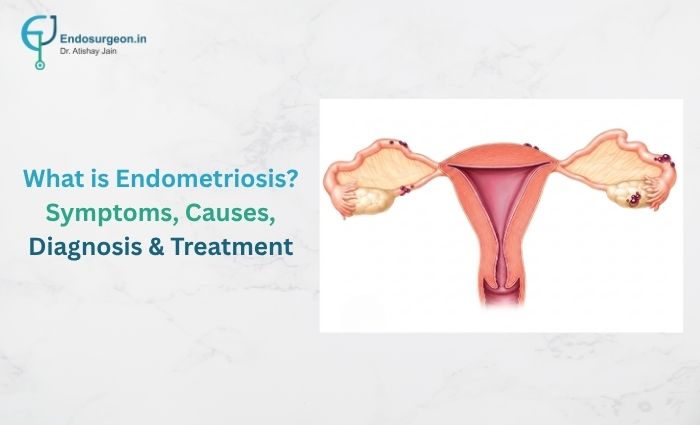
Endometriosis is a health condition in which endometrial tissue, similar to your uterine lining- endometrium, grows outside of your uterus.
According to the WHO, endometriosis affects almost 10% of women of reproductive age globally.
But what is endometrial tissue? It is the tissue which lines the uterus. Its function is to prepare and maintain pregnancy. But, how? Every month, this tissue in your uterus grows and thickens to support pregnancy.
If no pregnancy happens, this lining breaks down and comes out as your monthly menses or period. If pregnancy does occur, this lining nourishes the baby at the start and helps protect it by regulating your body’s immune response.
But in cases of endometriosis, this tissue begins to grow beyond the uterus rather than within it.
Some locations where this growth occurs in your body include:
- Ovaries- chocolate cyst
- Fallopian tubes
- Lining of the pelvis- peritoneum
- Bladder or bowels (in severe cases)
- Rarely away from pelvis- diaphragm, lungs
Just like the tissue inside the uterus, these tissues respond to hormones on a monthly basis, meaning they grow, break down, and bleed during the menstrual cycle. The blood cannot exit the body in such circumstances, leading to inflammation, irritation, fibrosis, swelling, and pelvic pain.
Over time, this disease also leads to scar tissue, adhesions, and ovarian cysts (endometriomas). In advanced cases, deep infiltrating endometriosis where it penetrates deep below may affect nearby organs and interfere with daily life and fertility.
Common Symptoms of Endometriosis:
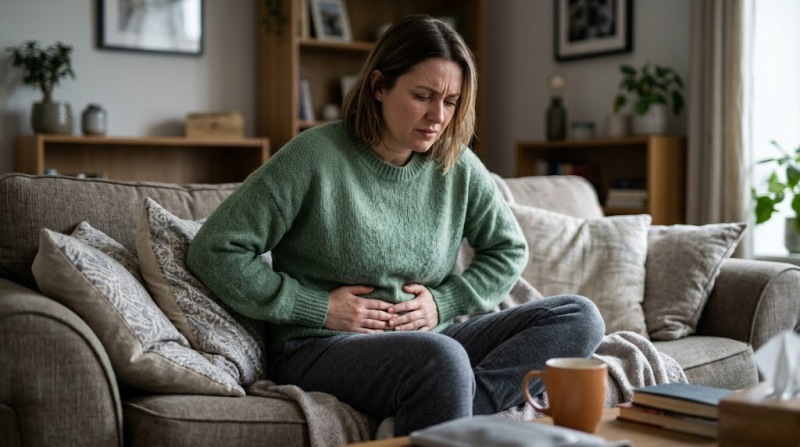
The most common symptom of endometriosis is you feel lower abdominal pain (pelvic pain). This pain can be mild or severe. Endometriosis symptoms can mostly occur before or during your period.
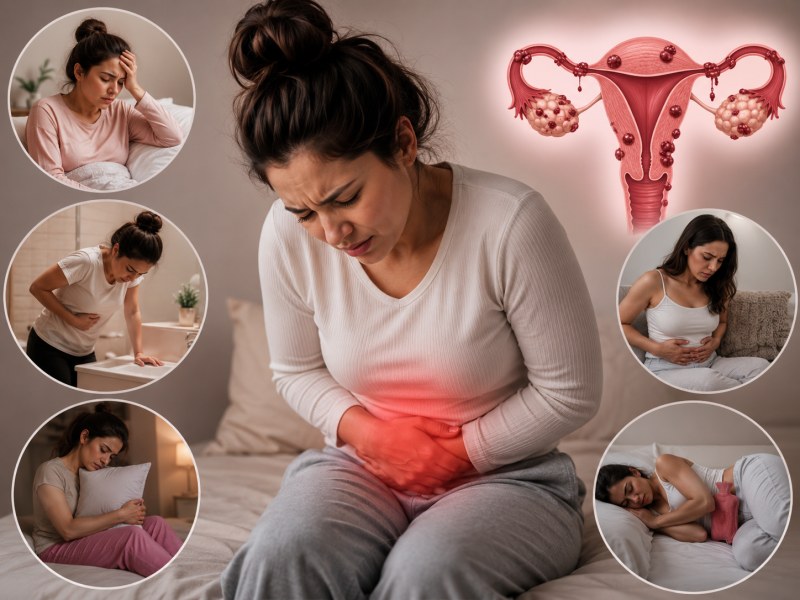
The following are the other symptoms that you may experience:
- Very painful cramps during your periods
- Belly or back pain that makes you uncomfortable, sometimes even between periods
- Heavy bleeding, or spotting (light bleeding) that shows up in between your periods
- You feel pain during intercourse
- Trouble conceiving when you are trying for a pregnancy
- Pain when you urinate or during bowel movements/defecation
- Stomach issues like diarrhea, constipation, or bloating
Some women who have no experience of any symptoms still have severe diseases. On the other hand, some may have severe pain but have a smaller amount of endometrial tissue growth.
Even sometimes you may not realize you have it. It only becomes clear when you face difficulty becoming pregnant.
Causes and Risk Factors of Endometriosis:
The exact causes of endometriosis are not known. The possible endometriosis cause are as follows that may contribute to this gynecological condition:
- Retrograde menstruation, where your period blood flows backwards into the fallopian tubes
- Hormone changes that make tissue grow in the wrong place
- Extra estrogen (estrogen dominance) that may trigger tissue growth outside your uterus
- A weak immune system that does not clear abnormal tissue
- After surgeries like C-sections or hysterectomies, cells from your uterus lining can attach to the healing cut and grow there
- Some cells in your belly or pelvic area may change into endometrial tissue because of hormones
Some factors can raise your chances of developing endometriosis, such as:
- If your mother or sister has endometriosis, your risk is higher
- Starting your period very early, before 11
- You have long periods of more than 7 days
- Your period cycle is less than 27 days
- Never having given birth can make you more likely to develop it
- Having a lower body weight may be linked to a higher risk
- Structural issues that block normal menstrual flow
Even though these factors can increase your chances of having endometriosis, they do not cause endometriosis.
How is Endometriosis Diagnosed?
Endometriosis symptoms are similar to those of other reproductive health conditions. Because of this, many women ignore the early signs of endometriosis, because they mistake them for normal period discomfort.
Therefore, it is necessary to undergo a medical evaluation for this condition. First, the medical professional will assess your menstrual status and other related symptoms.
Medical examinations include:
- Medical history
- Analysis of symptoms, for example, painful menstruation and chronic pelvic pain
- Pelvic examination to find any tenderness, ovarian cysts, and other abnormalities.
Moreover, your doctor may also recommend that you go for an imaging examination, such as:
- Ultrasound: Helps diagnose ovarian cysts known as endometriomas and deep infiltrating endometriosis in bowel, bladder and other pelvic structures.
- MRI: Recommended in complex and severe cases to detect the affected area where ultrasound isn’t able to diagnose.
Treatment Options for Endometriosis:
Your treatment for endometriosis will vary based on the intensity of your symptoms, age, and plans for conception. Some find relief through medications and lifestyle changes, while others require surgery.
Below are the treatment procedures used:
| Treatment Type | Treatment Options | How It Helps You |
| Medications for Pain Management | Nonsteroidal anti-inflammatory drugs (NSAIDS) such as ibuprofen | Help you reduce cramps, inflammation, and pelvic pain |
| Hormonal Therapy | Birth control pills | Stop your ovaries from making hormones and slow down endometriosis tissue growth |
| Progestin therapy | ||
| GnRH medicines (Gonadotropin-releasing hormones) | Put your body in a temporary menopause state to shrink endometriosis tissue | |
| Danzole (artificial hormone) | In some cases, helps block tissue growth | |
| Surgical Procedure | Laparoscopy | A minimally invasive surgery done through small incision to remove the endometriosis can be fertility enhancing or radical- hysterectomy |
Along with medical treatment, there are some simple lifestyle adjustments that may assist you in managing endometriosis. These include:
- Exercising regularly to keep your body active
- Eating right to regulate your hormones
- Getting enough rest to restore your energy
- Managing stress for your general well-being
Medical management is a temporary relief like a band-aid over an injury and doesn’t really treat or eliminate the disease, it just suppresses the symptoms of the disease. While surgical excision is the gold standard treatment for endometriosis where the disease is eliminated and excised.
In case you have fertility issues resulting from endometriosis, individualized fertility programs may be necessary for you.
When to See an Endometriosis Specialist in Indore:
Dr Atishay Jain (Endometriosis & Gynecological Laparoscopy Specialist) in Indore can help you with medical management in mild cases and specialised endometriosis excisional laparoscopic surgery to manage endometriosis.
Consulting an expert becomes necessary if any of the following are noticed in you:
- You suffer from extreme abdominal pain
- You suffer from extremely heavy menstrual periods
- Your menstruation is too heavy for you
- You find it difficult to conceive
Conclusion: Living with Endometriosis
Living with endometriosis is not easy. It affects both your body and your mind. But early diagnosis and the right treatment can make a big difference. With proper care, you can manage symptoms better, regain control, and feel more comfortable in your daily life.
FAQs:
The exact cause is not fully known, but retrograde menstruation, estrogen dominance, and a weak immune system are believed to play a major role in allowing endometrial tissue to grow outside the uterus.
The first signs often include severe period cramps, pelvic pain, and heavy menstrual bleeding. Some women also notice pain during sex or spotting between periods — signs that should never be ignored.
Doctors diagnose endometriosis through pelvic examination, ultrasound, MRI, and most accurately through laparoscopy. Treatment includes hormonal therapy, pain medications like NSAIDs, and laparoscopic surgery depending on severity and fertility goals.
Endometriosis is classified into four stages — minimal, mild, moderate, and severe — based on the location, depth, and spread of endometrial lesions. Stage 4 involves deep infiltrating endometriosis affecting multiple organs and fertility.
While ultrasound and MRI help detect endometriomas (ovarian cysts), the only test that truly confirms endometriosis is laparoscopy, where doctors visually examine and take a biopsy of the affected tissue.
A diet rich in anti-inflammatory foods like green vegetables, fruits, and omega-3 fatty acids helps manage endometriosis symptoms. Reducing red meat, processed foods, and excess estrogen-rich foods may slow tissue growth and reduce pelvic pain.
Endometriosis can begin as early as when a girl gets her first period, especially if it starts before age 11. It most commonly affects women in their 20s and 30s during their reproductive years, though it can occur at any age.