

The most common questions I hear in my clinic are, “Doctor, why does my period pain keep getting worse every year? And could this pain be affecting my chances of pregnancy? Why am I still suffering from pain even after taking medicines?”
If you experience severe abdominal pain, heavy bleeding, or fertility concerns that are linked to endometriosis, you need to seek help from a doctor specialised in treating endometriosis.
But many women stay confused because these signs can look like other gynaecological issues. Some keep changing medicines or using temporary pain relief without knowing the real cause of their discomfort.
From my perspective, early diagnosis and proper treatment are very important. They help prevent endometriosis from disturbing daily life and reproductive health.
This is where laparoscopy becomes a key option. But when I advised a laparoscopy, patients were confused, “Do I really need surgery?” “Is laparoscopy painful?” or “Will recovery take a long time?”
The aim of this article is to help patients understand how laparoscopy for endometriosis works, when it is recommended, and how it can support effective diagnosis, treatment, and long-term symptom relief.
What is Laparoscopy and How It Works:
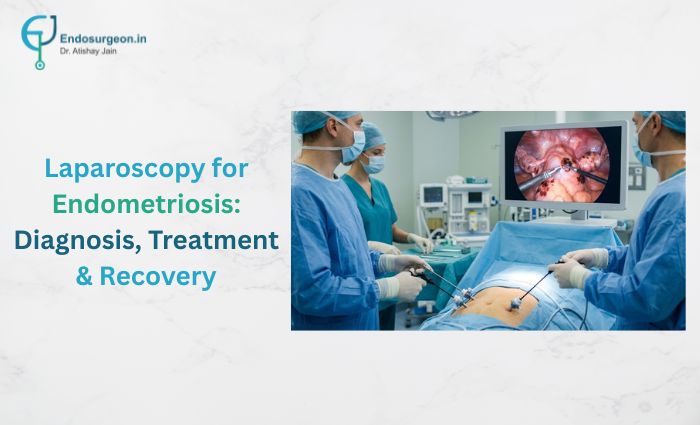
Laparoscopy is a minimally invasive gynecological surgery, also called “key-hole surgery”. Doctors use laparoscopy to effectively treat endometriosis by excision of disease.
Many patients have a question: how does laparoscopy work? And how can a doctor see inside your body without a big cut?
The doctor makes a small incision for this procedure. By using a laparoscope, which is a thin tube with a light and a camera, the doctor shows your pelvic organs on a screen. It helps identify endometriosis tissue, cysts, adhesions, and scars.
Laparoscopy falls into two broad categories:
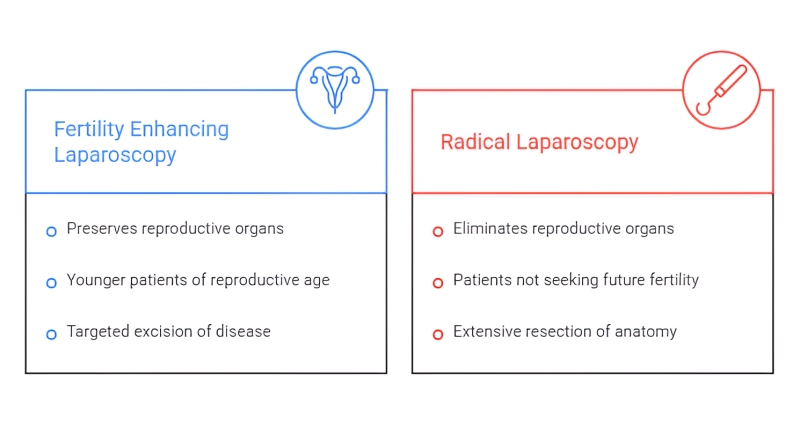
- Fertility enhancing laparoscopy: Used for females who are younger, of reproductive age group and want to preserve their fertility, in this type of surgery only the endometriosis disease nodules, cysts are removed without removing the uterus, ovaries or fallopian tubes.
- Radical laparoscopy: Used to treat endometriosis when the female doesn’t need to preserve her future fertility, we remove the uterus, ovaries or fallopian tubes along with the endometriotic nodules in the procedure.
Compared to open surgery, laparoscopy usually:
- Less pain
- Smaller scars
- Faster recovery
- Better visualisation due to magnification of camera
- Better precision due to magnification
- Lesser hospital stay
The surgery is done under general anesthesia. Most patients return home within one or two days.
Why Laparoscopy is Recommended for Endometriosis:
Endometriosis affects 247 million women worldwide, and experts estimate that nearly 42 million women in India may be living with this condition during their reproductive years.
As awareness and diagnosis of endometriosis continue to increase in India, laparoscopic surgery has become one of the most commonly preferred minimally invasive procedures for diagnosing and treating the condition.
Laparoscopy is often recommended for endometriosis because it helps your doctor find any abnormalities and manage them properly. Sometimes, medical examination and other imaging tests cannot accurately diagnose it, but laparoscopy can provide a proper diagnosis.
If medicine and any hormonal therapy can not help reduce your pain, your doctor may recommend this surgery. During this surgical procedure, the doctor can remove scar tissue, ovarian cysts, and deep lesions that may affect your organs.
Laparoscopy is a gentle surgery that protects your healthy tissue. It reduces pain and improves pelvic health so you can get back to your life faster. Many women find they have more comfort and freedom after this treatment.
Benefits of Laparoscopic Surgery for Endometriosis:
Some of the key benefits of laparoscopic surgery for endometriosis that you should know as follows:
1. Better Pain Relief:
One of the most common benefits of this surgery is to relieve endometriosis pain. In this case, the surgery will reduce the amount of pelvic pain, menstrual cramps, and overall discomfort you feel on a regular basis.
2. Minimally Invasive Procedure:
The surgeon performs a minimally invasive surgery using smaller incisions compared to a major surgery. Therefore, it causes less bleeding and fewer infections.
3. Faster Recovery:
The recovery period from minimally invasive endometriosis surgery tends to be shorter compared to regular surgical procedures. There will be less hospitalization time, and you will be able to resume your routine work and activities within several weeks.
4. Improved Fertility Outcomes:
Laparoscopic treatment for endometriosis may improve fertility outcomes in some women. Removal of the blockage of the reproductive organs, such as the presence of cysts and adhesions, leads to improvement in the functioning of your body.
5. Advanced Surgical Precision:
Surgeons use a camera to see pelvic organs more clearly. This helps them remove abnormal tissue while preserving healthy structures.
Risks and Considerations of Laparoscopy:
Laparoscopy for endometriosis is usually safe and works well. But like any other surgery, it has some risks. Most women heal faster than they would with open surgery. Still, recovery time depends on how severe the condition is and how much the doctor had to remove.
Endometriosis symptoms may return in some women. This means you may require ongoing treatment or long-term management.
Before surgery, consultations are essential. This allows you to be informed about the benefits, risks, and your treatment outcome. You should discuss your fertility objectives, pregnancy plans and even your recovery experience with your surgeon.
Read Also: What is Endometriosis? Symptoms, Causes, Diagnosis & Treatment
Recovery After Laparoscopy for Endometriosis:
Recovery from an endometriosis laparoscopy is usually quicker than from open surgery because it is less invasive. Following your operation, you may experience a feeling of pain, bloating, and fatigue for several days. Shoulder discomfort is common among some women.
Most patients go home in one or two days. Full recovery takes a few weeks, depending on the surgery.
Follow these simple steps to heal well:
- Take plenty of rest and follow your doctor’s advice
- Drink water and eat healthy, balanced meals
- Start light walking to improve blood flow and healing
- Avoid heavy lifting or hard workouts at first
- Go for follow-up visits so your doctor can check your progress
Many women notice they feel better both physically and emotionally once pelvic pain is treated.
Choosing the Right Endometriosis Surgeon in Indore:
Selecting an expert for laparoscopy for endometriosis is critical. It will not only give you a proper diagnosis but also a proper treatment. Thus, it will be more advantageous for your future health.
Try to choose a doctor:
- With sufficient experience in surgery for endometriosis
- With the use of modern laparoscopic equipment
- Offering individualized treatment
- Having positive reviews and high qualifications
- An experienced surgeon will have better skills for planning a surgery and minimizing possible risks
Patients in Indore can also benefit from advanced laparoscopic care offered by Dr Atishay Jain, who focuses on minimally invasive gynecological surgery and advanced endometriosis treatment.
Conclusion: Is Laparoscopy the Right Choice?
Laparoscopy is the gold standard treatment for symptomatic and deep infiltrating endometriosis. It helps relieve pelvic pain, increases your chances of getting pregnant, and helps you recover quickly with minimal scarring. Your doctor can recommend the appropriate treatment based on your condition.
FAQs
The minimally invasive endometriosis surgery is done under general anesthesia, so you feel no pain during the procedure. After surgery, mild soreness, bloating, or pelvic discomfort is normal and usually settles within a few days with rest and medication.
After laparoscopic surgery for endometriosis, most women go home within one or two days. Full recovery from endometriosis laparoscopy usually takes two to four weeks, depending on how severe your condition was.
Laparoscopy for endometriosis can remove cysts, scar tissue, and abnormal growths, giving significant relief. However, it is not a permanent cure — endometriosis symptoms may return in some women and long-term management may be needed.
If severe period pain, heavy bleeding, or fertility problems are not improving with medicines or hormonal therapy, your doctor may recommend a diagnostic laparoscopy. It is currently the most reliable way to confirm endometriosis and plan proper treatment.
A typical laparoscopic procedure for endometriosis takes anywhere from 30 minutes to two hours. The duration depends on the severity of endometriosis, how much tissue needs to be removed, and whether cysts or deep lesions are present.