
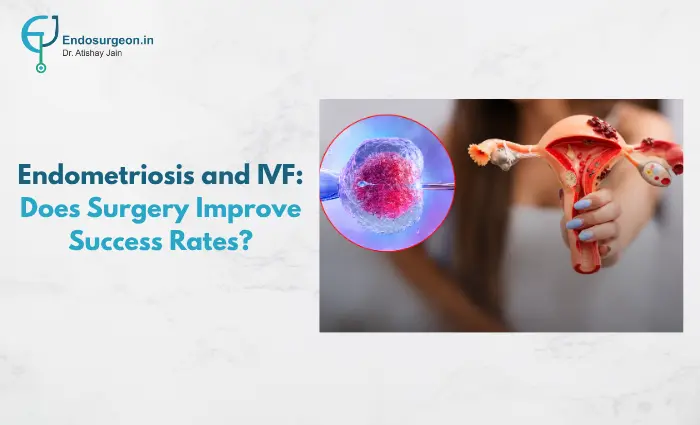

When it comes to fertility treatment and endometriosis surgery, the latter often outweighs as a seemingly crucial step to increase the success rate of the IVF. But there’s also a silver lining you have to consider.
Undergoing such a major interventional procedure could further complicate your fertility treatment and reduce the chances of conception. People often believe that removing lesions can relieve the pain or help address problems that otherwise affect fertility.
What you most likely are unaware of is that operating on an ovarian endometrioma can damage the organ’s healthy tissues and reduce your egg reserve. That’s why understanding the trade-off of endometriosis and IVF will help you choose the most appropriate treatment path forward.
Endometriosis IVF: Does surgery improve your chances?
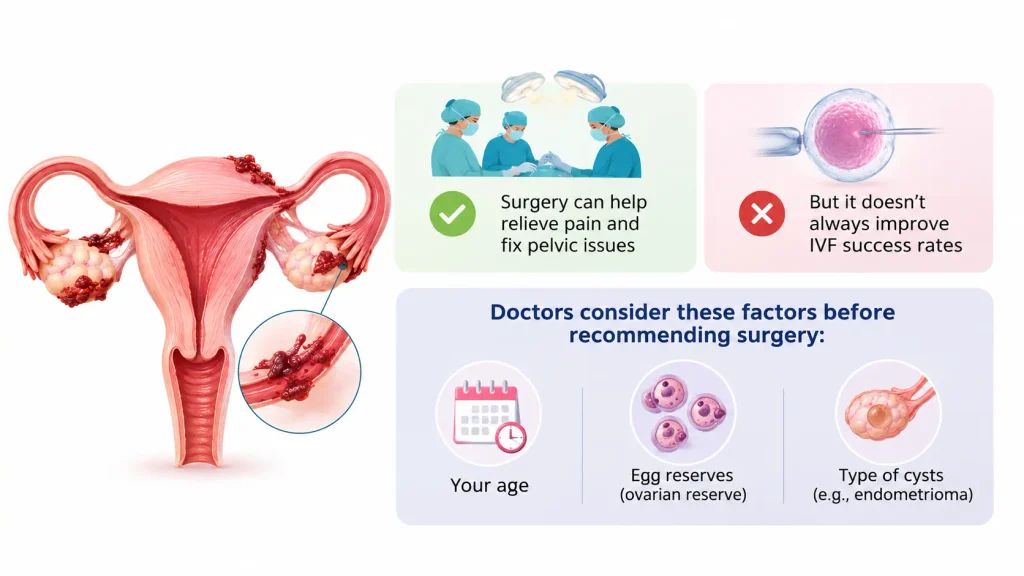
Having surgery for endometriosis is not guaranteed to improve your chances of getting pregnant using IVF. Whilst removing endometrial lesions can help you with your pain and any pelvic anatomy issues, there is no evidence that routinely having surgery improves live birth rates.
If you want to understand the condition before weighing treatment options, you can read about endometriosis symptoms, causes and treatment.
Endometriomas can cause damage to other healthy tissue on your ovary and can affect your ovarian reserve. That’s why IVF specialists always make sure to consider the below factors to decide if the surgery is at all a safer approach or not:
- Your age
- Egg reserves
- Type of cysts
IVF success rate with endometriosis: What the research shows
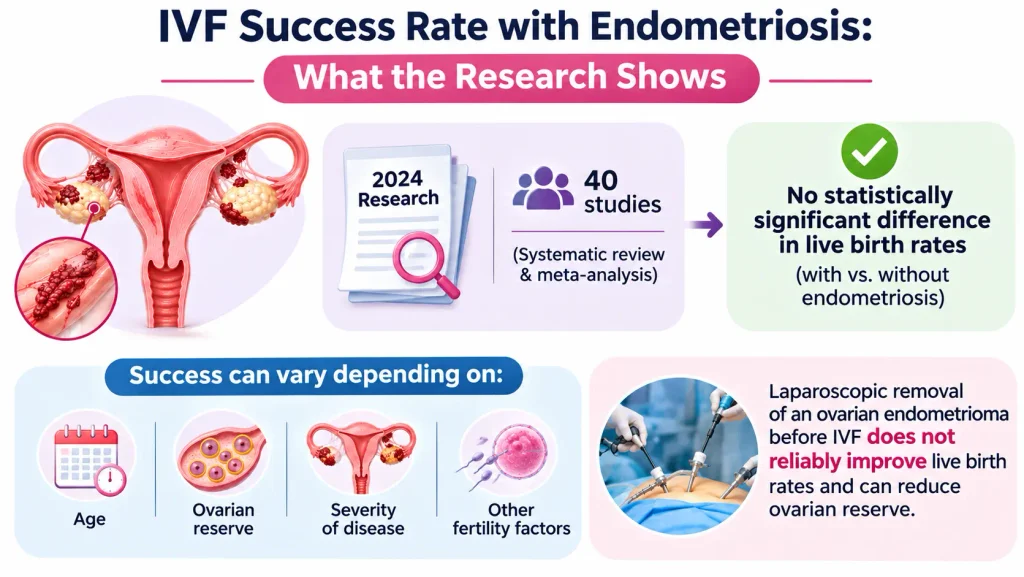
Having this ovarian disorder does not necessarily mean you have a reduced chance of conceiving using IVF. A systematic review and meta-analysis was performed in 2024 to assess 40 studies. It showed there was no statistically significant difference in live birth rates between women with endometriosis compared with those without.
The way endometriosis affects pregnancy and fertility also depends on the stage of the disease and where the lesions are located.
However, this can vary depending on factors such as age, ovarian reserve, severity of disease, and fertility factors. There is research to show that laparoscopic removal of the ovarian endometrioma prior to treatment does not reliably improve live birth rates and can cause reduced ovarian reserve. Therefore, you should consider your fertility profile when deciding your treatment.
Since PCOS can also affect fertility, it helps to know the difference between endometriosis vs PCOS before planning treatment.
Laparoscopy before IVF: When it helps
Whether or not surgery actually becomes beneficial in improving your chances of experiencing motherhood through in-vitro fertilisation is quite a dicey question to discuss. Its answer basically depends on the reasons behind your need to go through laparoscopic surgery.
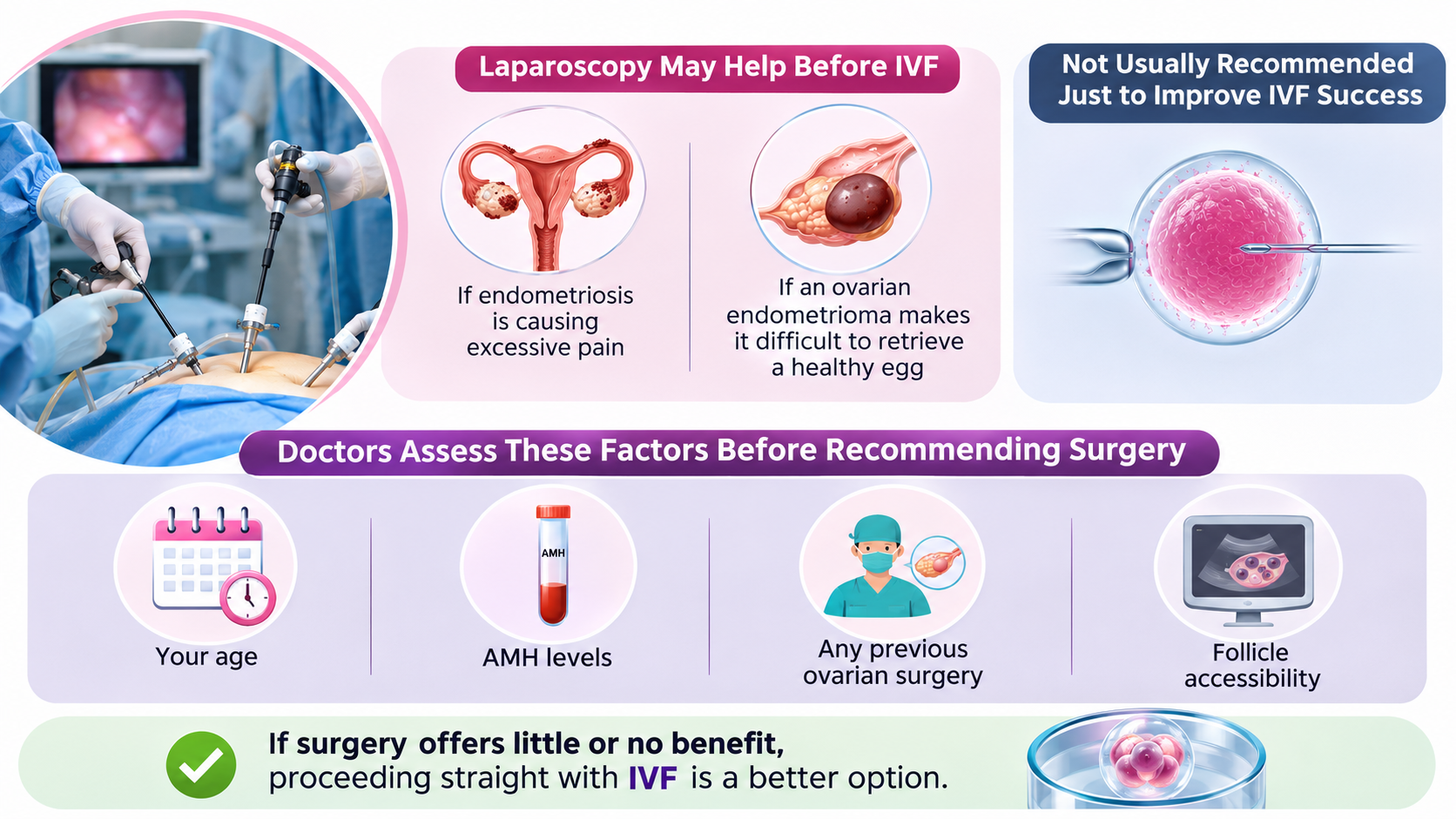
In cases when endometriosis is causing excessive pain or an ovarian endometrioma makes it difficult to retrieve a healthy egg, your gynecologist might suggest going through the surgery.
If you are unsure whether your pain is typical, this guide explains whether period pain is normal and when it may point to endometriosis.
However, doctors do not usually recommend this procedure as a preliminary necessity to improve the IVF’s success rate. That’s because the risks associated are too high. So, before recommending any laparoscopic procedure, every fertility specialist assesses:
- Your age
- AMH levels
- Any trace of previous ovarian surgery
- Follicle accessibility
This approach is consistent with the ESHRE guideline on endometriosis, which sets out when surgery before assisted reproduction may be considered.
If the assessment suggests that laparoscopy would bring little to no benefit to your reproductive health, proceeding straight with IVF is a much better option.
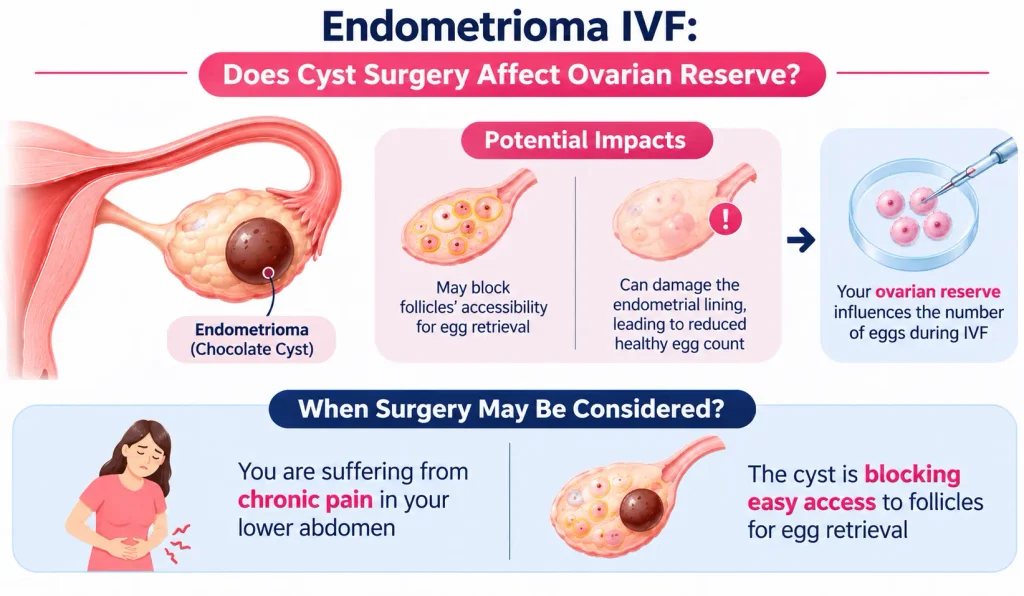
Endometrioma IVF: Does Cyst Surgery Affect Ovarian Reserve?
When you have a chocolate cyst, it doesn’t automatically mean you won’t get pregnant or there can be complications throughout your pregnancy. That’s why opting for its surgical removal just because you are preparing for IVF isn’t the right move, not always at least.
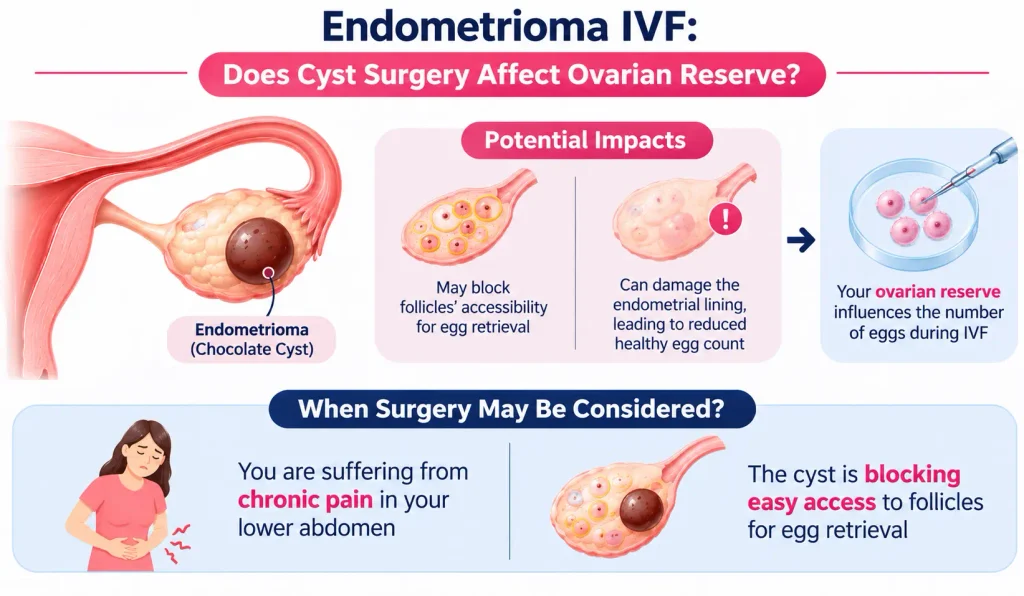
The trickiest part is that the cyst itself and the surgical way of removing it, both can complicate the IVF process further. For example, an ovarian endometrioma can interfere with your follicles’ accessibility, making egg retrieval almost next to impossible.
What’s worse is that the endometrial lining of your ovaries can get damaged, which will ultimately lead to reduced healthy egg count. Every IVF specialist remains concern about this trade-off because your ovarian reserve will influence the number of eggs your body can produce during IVF stimulation. Hence, surgery becomes a practical option only when:
- You are suffering from tremendous, chronic pain in your lower abdomen due to the cyst
- The cyst is blocking an easy access to the follicles for egg retrieval
IVF success with Stage 4 endometriosis
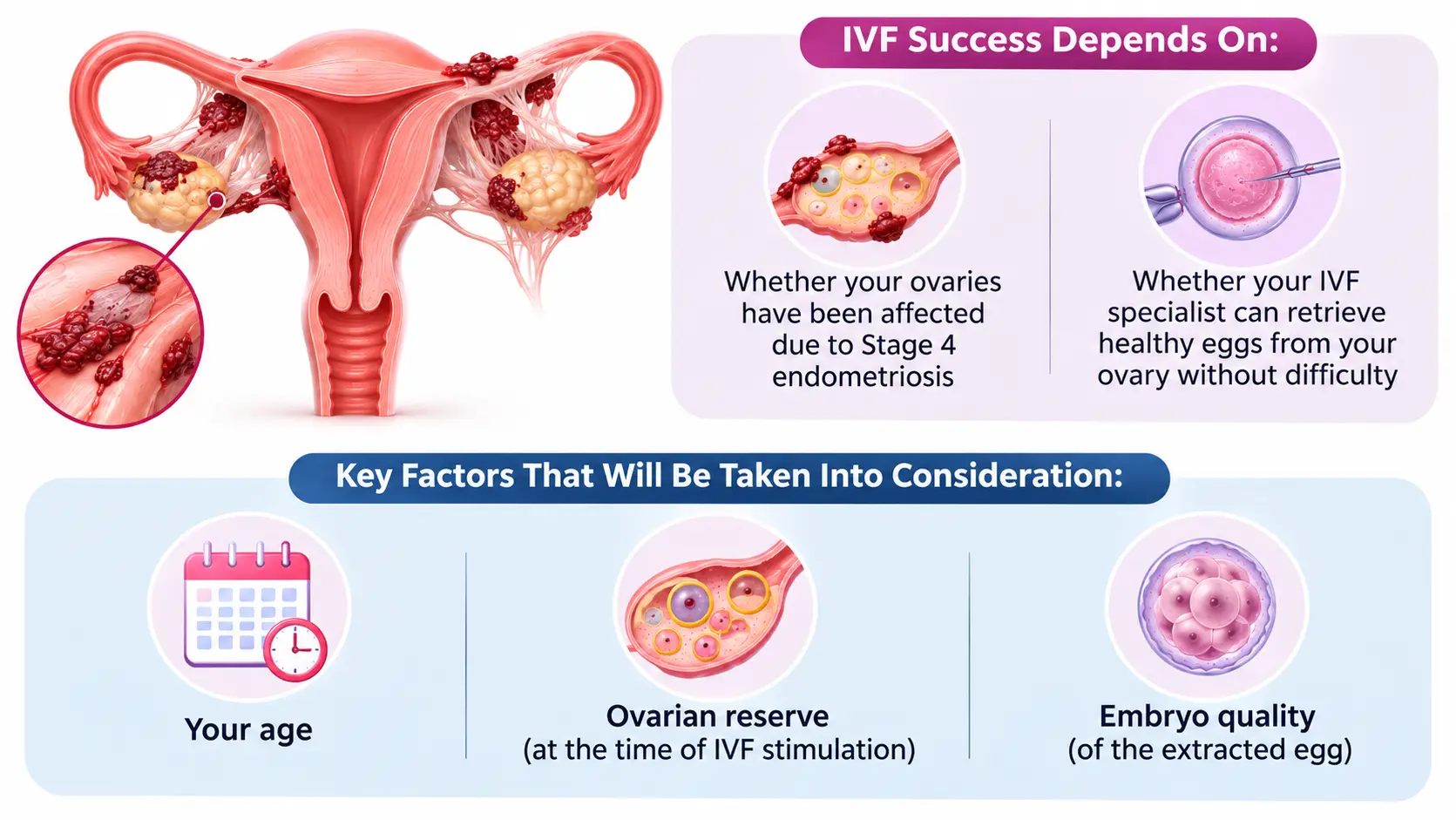
This particular gynecological problem describes an extensive disease, not the end of your fertility options. That’s because your IVF’s success will depend on:
- Whether your ovaries have been affected due to Stage 4 endometriosis
- Whether your IVF specialist can retrieve healthy eggs from your ovary without difficulty
The problem arises when your ovaries have a distorted anatomy because of dense pelvic adhesions. At times, bilateral endometriosis or a previous ovarian surgery will leave your ovary with fewer follicles for further stimulation. However, do not think that the disease severity alone will predict whether the embryo implantation will be a success or not. Rather, here, three major factors will be taken into consideration, including:
- Your age
- Ovarian reserve at the time of IVF stimulation
- Embryo quality of the extracted egg
Stage 4 disease can also involve deep infiltrating endometriosis, which affects how the pelvic organs look and function.
Endometriosis and IVF failure: Is surgery the next step?
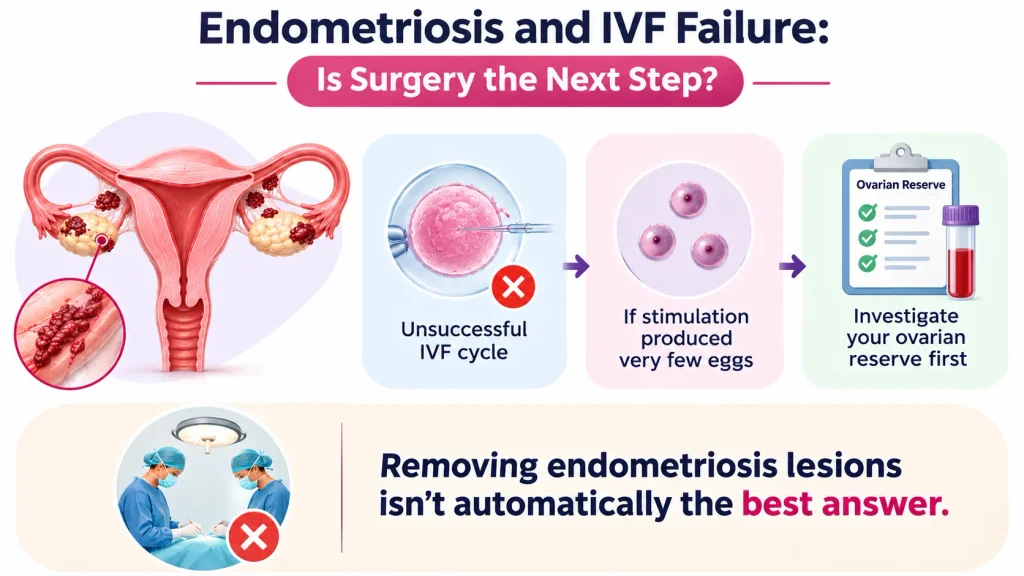
After an unsuccessful cycle, getting the surgery done might seem like a practical approach. But that’s not the medical reality! Suppose the stimulation produced very few eggs than what was anticipated.
In such a case, your specialist can investigate your ovarian reserve further before even considering the surgery. Even if stimulation was a success, embryo implantation can fail altogether. Yet, removing the endometriosis lesions isn’t automatically the best answer.
IVF after endometriosis surgery: Timing and pregnancy chances
There isn’t a set time you will need to wait after endometriosis surgery. This will depend on the type of surgery that has been performed, how well you recovered, and whether your ovarian reserve has been affected. If you had a straightforward laparoscopy, your IVF specialist can start treating you only after you’ve recovered.
However, if you had significant surgery to your ovaries, then this could reduce the time you have available for fertility treatment, especially if your ovarian reserve was also low. Your chances of conception will depend on your age, number of eggs, embryo quality, and other fertility factors. Therefore, it’s better to discuss this with your specialist about the next-best steps, as waiting for longer to recover may affect your treatment.
Surgery first or IVF first? How to decide
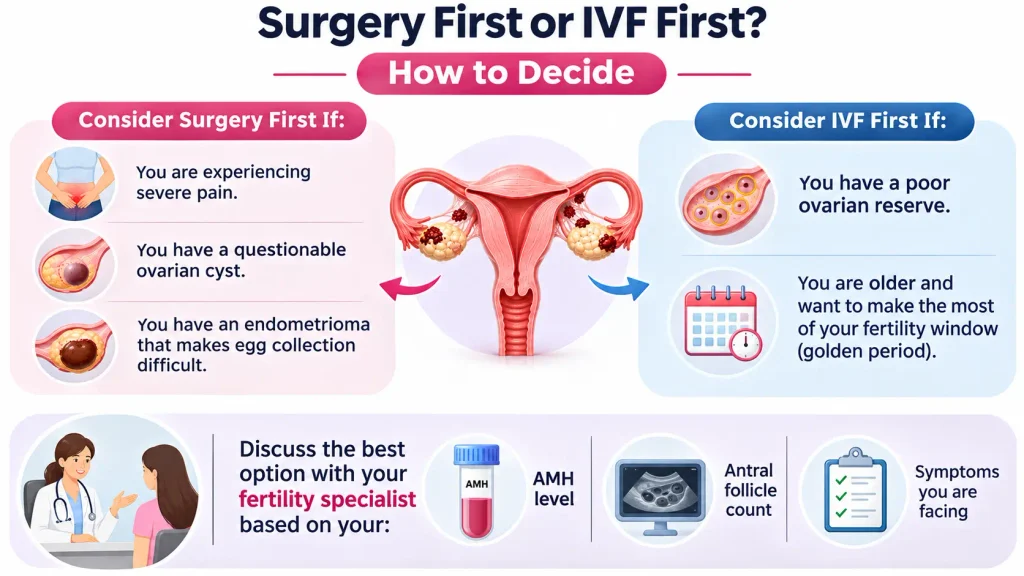
This will depend on what you aim to achieve. If you are suffering from severe pain, questionable ovarian cysts or an endometrioma causing trouble when collecting eggs, then you will benefit from having surgery to address the real issue.
If you have a poor ovarian reserve, or are older, then it is best to start with IVF to make the most of the golden period. Make sure to discuss with your fertility specialist about the best option that’s safe for you depending on your:
- AMH level
- Antral follicle count
- Symptoms you are facing
If surgery is not the right choice for you, there are ways to manage endometriosis without surgery that you can discuss with your doctor.
Why choose Dr Atishay Jain for endometriosis treatment?

Choosing a specialist will mean that there is someone who will consider your symptoms and aims for fertility. Dr Atishay Jain can advise you about the treatments available.
It is important to discuss your diagnosis, ovarian reserve, likely benefit, and risk of surgery before any treatment. This will give you a clear individualised management plan so that you can make informed decisions about how you wish to manage your Endometriosis.
Patients often ask about the endometriosis treatment cost, which depends on the procedure and the stage of the disease.
Conclusion
Surgery may not be required before IVF. Taking into account your symptoms, egg reserve, age and fertility ambitions, your specialist will advise you on whether surgery would offer any benefit. Your specialist will also take into account the risks and potential benefits to help you make a decision that gives you the best chance of becoming pregnant.
FAQs
Not necessarily. Many women with endometriosis have IVF outcomes similar to women without it. The result depends on your age, ovarian reserve, severity of the disease and other fertility factors.
Yes, it can. Removing an ovarian endometrioma may damage healthy ovarian tissue and lower the number of eggs available for stimulation. This is why surgery is weighed against its risks before IVF.
There is no fixed waiting period for starting IVF after endometriosis surgery. The timing depends on the extent of surgery, recovery, ovarian reserve and overall fertility condition. Your fertility specialist can recommend when it is appropriate to begin ovarian stimulation.
It depends on your goals and test results. Surgery may help if you have severe pain or a cyst blocking egg retrieval. IVF first is often preferred if you are older or have a low ovarian reserve, since time matters.
Your specialist will usually look at your AMH level, antral follicle count, age and symptoms. A history of ovarian surgery and how easily the follicles can be reached also matter.