
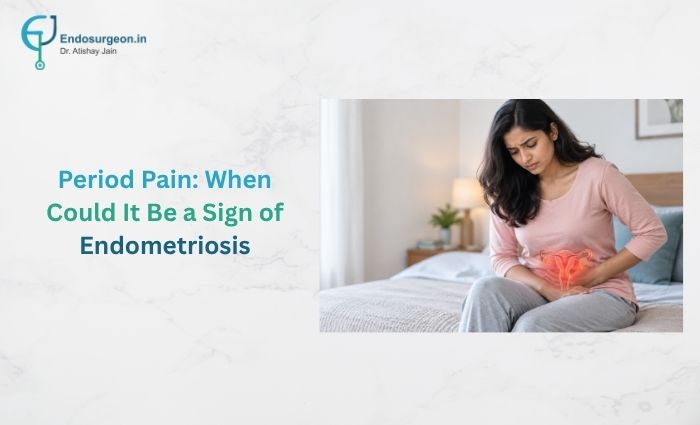

How do you know when period pain is just part of your cycle and when it may be something more?
A little cramping can be common, but pain that makes you change your plans, miss work, or wait for the day to finally pass is different. You may have been managing it the same way for months or even years.
- But have you ever wondered why your periods hurt so much?
- Can there be an underlying reason for pain that comes back every month?
- And when is it time to stop simply managing the pain and get it checked?
In this article, we will explore the link between period pain and endometriosis, the warning signs to look out for, and when it may be time to speak with a doctor.
Why Does Endometriosis Cause So Much Pain?
During your period, the tissue inside the uterus normally sheds and causes some cramping.
With endometriosis, similar tissue is present outside the uterus too. It also responds to your monthly hormones, which can cause swelling and inflammation in the pelvis.
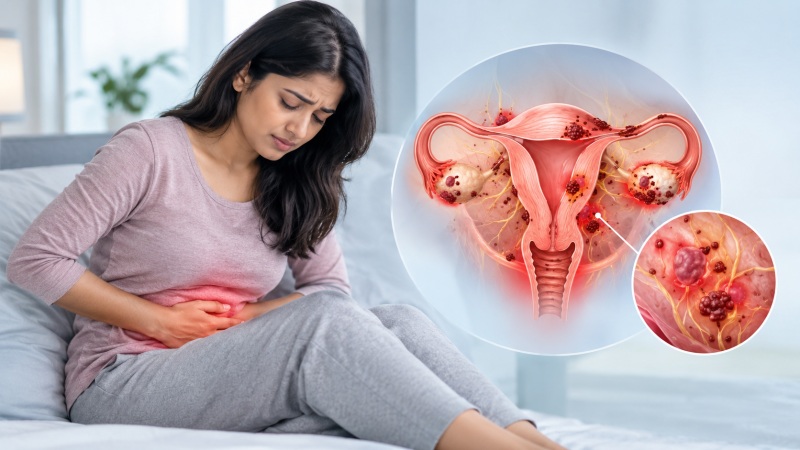
With time, this inflammation may lead to adhesions or scar tissue. That is why endometriosis pain during periods can feel deeper or much stronger than ordinary period cramps.
For example, you may feel severe pelvic pain during your period, or the discomfort may continue for a few days after the bleeding has stopped. The pain can be different for every woman.
Read Also: Understanding Endometriosis: Symptoms, Causes, and Treatment
Normal Period Cramps vs. Endometriosis Pain: What’s the Difference?
Not every time you have menstrual pain is a sign of endometriosis. The main difference is the level of pain and its duration, along with whether it disturbs everyday activities.
| Normal period cramps | Pain that may be linked to endometriosis |
| Usually starts around your period | May start before your period |
| Often improves with rest or simple pain relief | May be difficult to control |
| Usually gets better within a few days | May last longer or return between periods |
| You can usually continue your daily work | May make work, sleep or daily activities difficult |
| Mainly feels like cramping | May feel like deeper pelvic or lower back pain |
So, is period pain normal?
Mild cramps can be normal. But if your period pain regularly affects your daily life, it deserves attention.
According to the WHO, endometriosis can take an average of 4-12 years to diagnose. So, persistent pain should not be dismissed as “just period pain.”
Read Also: How to Cure Endometriosis Without Surgery?
Warning Signs That Your Period Pain Could Be Endometriosis:
Your body often gives small clues before you realise something is wrong. With endometriosis, the pain may follow a certain pattern or come with changes that you may have been ignoring for a long time.
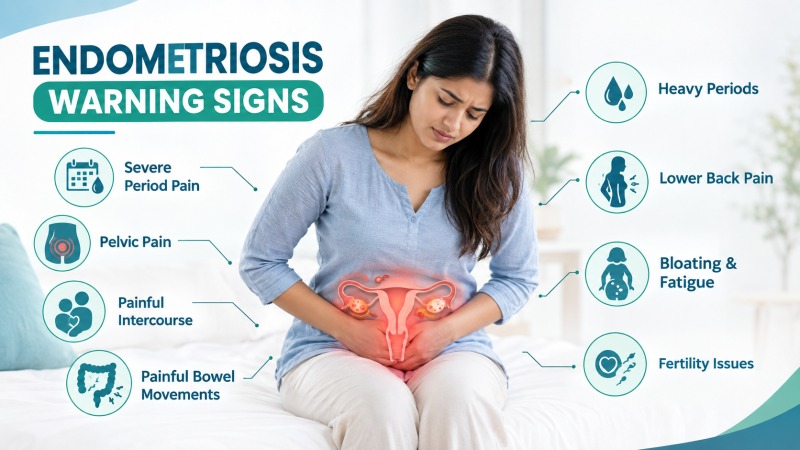
Here are some signs worth noticing:
1. Severe pain during periods – If your cramps are becoming stronger with each cycle, last longer than usual, or no longer improve with your usual pain relief, it is worth discussing them with your doctor.
2. Pain before your period – Endometriosis pain may begin a few days before bleeding and continue during your period.
3. Chronic pelvic pain – Pain that continues between periods or keeps returning during the month should not always be considered PMS.
4. Painful intercourse – Pain during or after sex, called dyspareunia, can occur with endometriosis.
5. Painful bowel movements – If passing stool becomes painful, especially during your period, mention it to your doctor.
6. Heavy periods – Heavy or longer-than-usual bleeding can occur with endometriosis, although it has many other possible causes.
7. Lower back pain – Your pelvic pain may also be felt in your lower back during periods.
8. Bloating and fatigue – You may notice bloating during periods or unusual tiredness. These symptoms alone do not confirm endometriosis.
9. Difficulty conceiving – If you are trying to conceive and have painful periods, discuss both with your doctor, as endometriosis can affect fertility.
Read Also: Stages of Endometriosis: Symptoms, Severity & Treatment
Why Endometriosis Often Goes Undiagnosed?
Endometriosis is hard to diagnose due to your symptoms being similar to some other common conditions such as IBS, ovarian cysts or fibroids. Some women may have very mild symptoms while others may suffer from severe pain.
Many women believe that periods that are painful are normal, and as a result, they may postpone diagnosis.
According to a 2025 review published in Health Care for Women International that included 23 studies, the average time it takes to diagnose endometriosis is 6.8 years.
This is the reason why we need to consider your symptoms as a whole and not just base it on your menstrual pain.
When You Should See a Doctor?
If your period pain is regularly affecting your daily life, it is worth finding out what is causing it. You do not have to wait until the pain becomes unbearable or start missing work and other activities every month.
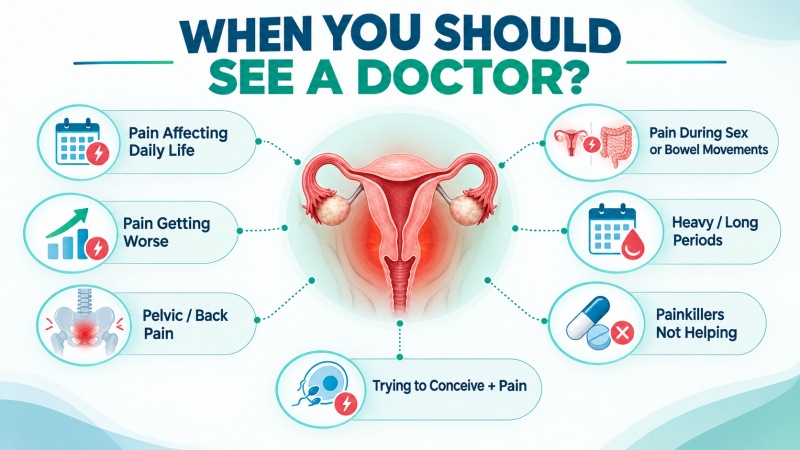
You should consider seeing a gynaecologist or an endometriosis surgeon if:
- Your period pain regularly affects your daily activities.
- The pain is becoming worse with each cycle.
- You have pelvic or lower back pain even when you are not on your period.
- Sex or passing stool becomes painful, particularly around your period.
- Your periods are unusually heavy or last longer than usual.
- Usual painkillers are no longer giving you enough relief.
- You are trying to conceive and also have painful periods or other symptoms suggestive of endometriosis.
But why is an early evaluation important?
According to research carried out in 2025 by the Indian Journal of Medical Research (ICMR), 21 women who underwent laparoscopy and were diagnosed with endometriosis showed that the period between onset and diagnosis was 6.3 years.
The study further revealed that the patients also reported impacts on their quality of life, work, relationships, and fertility.
Read Also: Does Endometriosis Affect Pregnancy and Fertility? Everything You Need to Know
How Doctors Confirm If It’s Endometriosis?
The process of diagnosing endometriosis is complicated, and it is not just one simple test. When you arrive at our facilities with complaints of painful menstruation, we may analyse when it starts, where it occurs, how long it lasts, and how it affects the way of living of the patient.
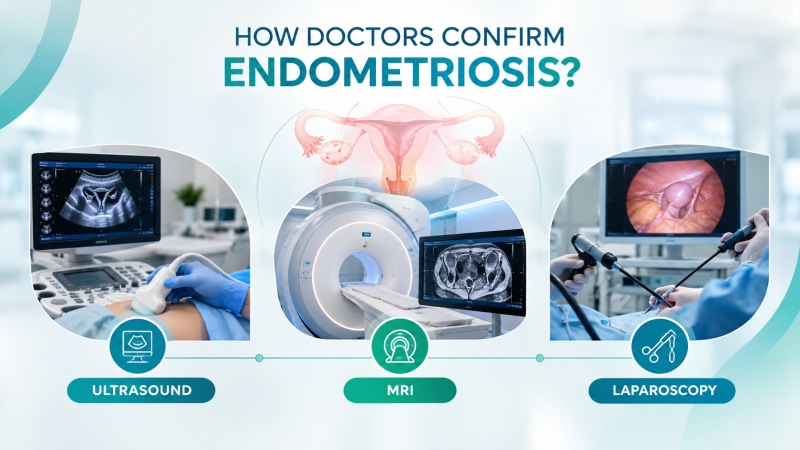
After that, we may recommend the following procedures:
- Ultrasound: This method is helpful in examining endometriomas and determining the causes of pelvic pain.
- MRI: This method can be applied in cases of deep endometriosis.
- Laparoscopy: Through this procedure, we are able to explore the causes of unexplained pain and eliminate them immediately.
What Are the Treatment Options?
If you are wondering how to ease period pain with endometriosis, treatment depends on your symptoms, the severity of the disease, your age, and whether you plan pregnancy.
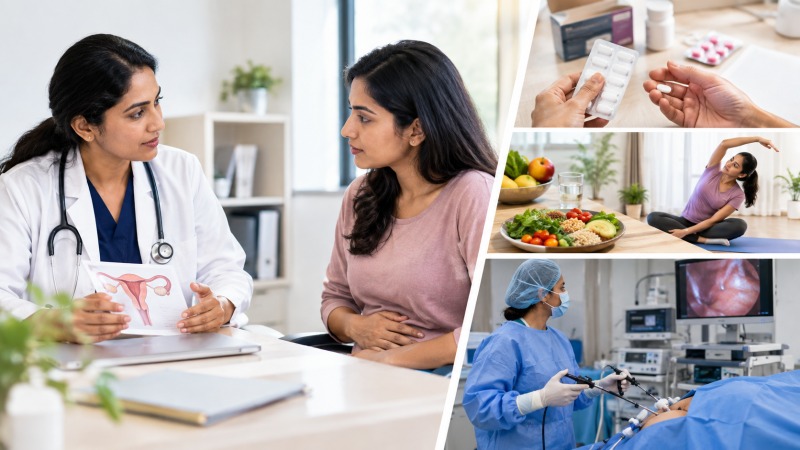
Possible endometriosis treatment options include:
- Pain medications to alleviate cramps and pelvic pain.
- Hormone treatment for symptom control and pain relief.
- Lifestyle alterations such as regular physical activity, good sleeping patterns, as well as healthy nutrition to help manage symptoms.
- In some cases, surgical therapy such as laparoscopic surgery is required when deep endometriosis and endometrioma are present.
Final Thoughts: Don’t Ignore Your Pain, Get It Checked
You do not have to accept severe period pain as a normal part of being a woman. If your pain keeps returning or starts affecting your everyday life, getting the right evaluation can help you understand what is really causing it.
Dr Atishay Jain, Endometriosis & Gynae Laparoscopy Specialist, focuses on understanding each woman’s symptoms and choosing treatment according to her needs. The right care can help you manage pain while keeping your future fertility in mind.
FAQs About Period Pain – When Could It Be a Sign of Endometriosis?
Severe menstrual pain that starts before your period, lasts longer, affects daily activities, or does not improve with usual pain relief may be linked to endometriosis.
No. Chronic pelvic pain can have several causes, including ovarian cysts, fibroids, IBS, or endometriosis, so proper medical evaluation is important before confirming the cause.
An ultrasound for endometriosis can help identify endometriomas and certain pelvic changes, but it may not detect every type of endometriosis, especially superficial disease.
Yes. Some people with endometriosis may have mild symptoms or no symptoms at all. Others may experience fertility problems or symptoms such as pelvic pain, painful sex, painful bowel movements or heavy menstrual bleeding. Symptoms can vary considerably from person to person.
Pain while passing stool, especially during menstruation, may be associated with bowel endometriosis or pelvic inflammation and should be discussed with a gynaecologist.
No. Treatment does not always involve surgery. Depending on symptoms, disease extent, treatment preferences and pregnancy plans, management may include pain medicines, hormonal treatment and other approaches. Surgery may be considered in selected cases.