
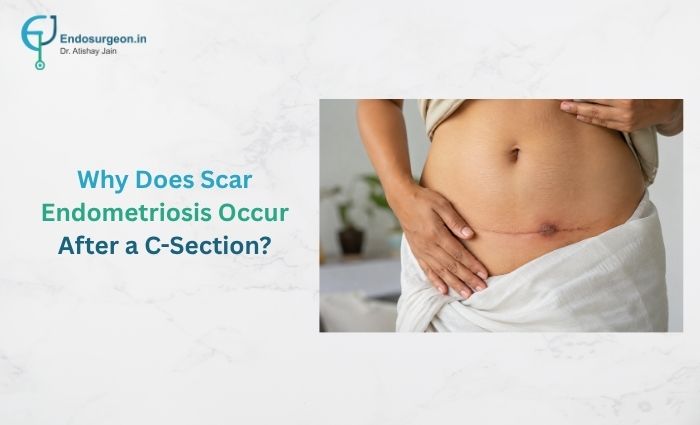

“Doctor, my C-section was done years ago, but now why is this swelling hurting only during my period?”
“Did something go wrong during my C-section?”
These are common concerns that we hear during our consultation. Here, it is important to know that when you experience a painful period with a lump repeatedly appearing around menstruation, the possible cause may be C-section scar endometriosis.
Let’s understand what C-section scar endometriosis is, how it forms, and how we can manage it.
What Is Scar Endometriosis After a C-Section?
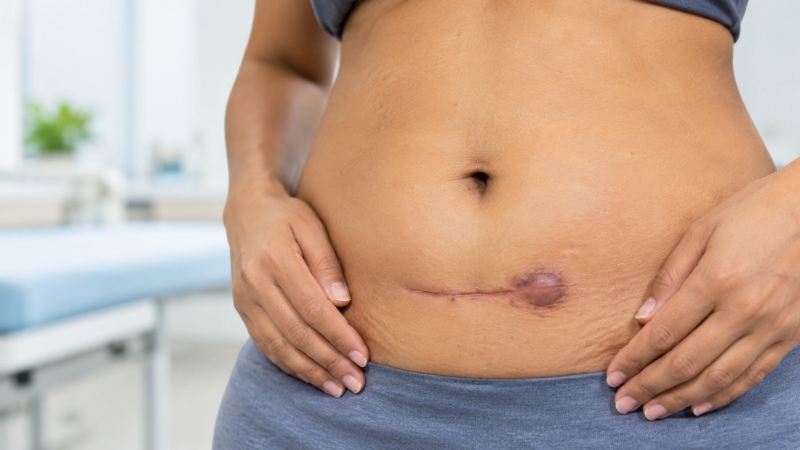
Scar endometriosis is a very rare condition in which endometrial-like tissue develops within your surgical scar.
This type of scar endometriosis is mostly found:
- After a cesarean section
- After operations like hysterectomies or tubal ligations
- Other abdominal surgeries
C-section scar endometriosis means endometrial-like tissue becoming implanted in or around the scar created during a cesarean delivery. This tissue may remain in the scar and respond to the hormonal changes of the menstrual cycle.
“Scar endometriosis is different from typical endometriosis. Typical endometriosis usually affects the pelvic organs, while scar endometriosis develops outside the pelvic cavity, most often in the abdominal wall near a previous surgical incision.”
- Dr. Atishay Jain, Endometriosis & Gynae Laparoscopy Specialist
How Common Is This Condition?
Scar endometriosis is a relatively uncommon complication of C-section.
A 2019 study published in BMC Women’s Health reported that cesarean scar endometriosis occurs in approximately 0.03% to 0.45% of women after cesarean delivery.
Because a lump or pain near an old surgical scar can resemble a hernia or other scar-related problem, the condition may sometimes be diagnosed late. Also, as C-sections are increasingly performed, doctors are becoming more aware of this uncommon complication. However, having a C-section does not mean that a woman is likely to develop scar endometriosis.
Read Also: Understanding Endometriosis: Symptoms, Causes, Diagnosis & Treatment
Why Does Scar Endometriosis Occur After a C-Section?
The exact C-section scar endometriosis causes remains unclear; we believe that implantation of endometrial cells during the operation is responsible.
During the operation, your uterus is opened to deliver the baby. However, the endometrial cells sometimes come into contact with the surgical wound. These may implant into your abdominal wall in the area of the Pfannenstiel incision, used for Cesarean sections.
Once these cells settle in the scar, they may survive within the abdominal wall and gradually form a small area of endometriotic tissue. Over time, this can lead to local inflammation and the formation of a painful scar nodule or abdominal wall mass.
This process is often called endometrial cell seeding.
But what makes this implanted tissue become active at certain times of the month? Let’s look at how hormonal changes during each menstrual cycle can influence activity and growth.
How Hormones Cause Swelling and Pain at the Scar?
Normally, your uterine lining undergoes changes during your menstrual cycle. This is because of hormones such as estrogen and progesterone.
Estrogen makes your lining thicker, and progesterone makes it ready after ovulation. These two hormones also influence the endometrial-like lining within the scar from the C-section.
Estrogen stimulates its growth, and certain tissues within the scar may not respond appropriately to progesterone. As a result, tissue becomes estrogen-sensitive, and over time it leads to inflammation. During your menstruation, the tissue swells and bleeds, leading to tenderness and cyclic pain around the scar.
Other Contributing Factors Beyond Cell Implantation:
Other conditions may also contribute to the creation of an environment in which the implanted tissue can grow, such as:
- Wound healing process: Various modifications in the surgical incision area may promote tissue growth.
- Inflammation process: A chronic inflammatory process may facilitate the survival of the implanted tissue.
- Immune changes: A local change in the immune response may allow cell survival.
- Blood vessels: Angiogenetic factors may facilitate the formation of blood vessels to supply the tissue.
- Pelvic endometriosis: The possibility of scar involvement in some women suffering from endometriosis in the pelvis may be higher.
Who Is at Higher Risk of Scar Endometriosis After a C-Section?
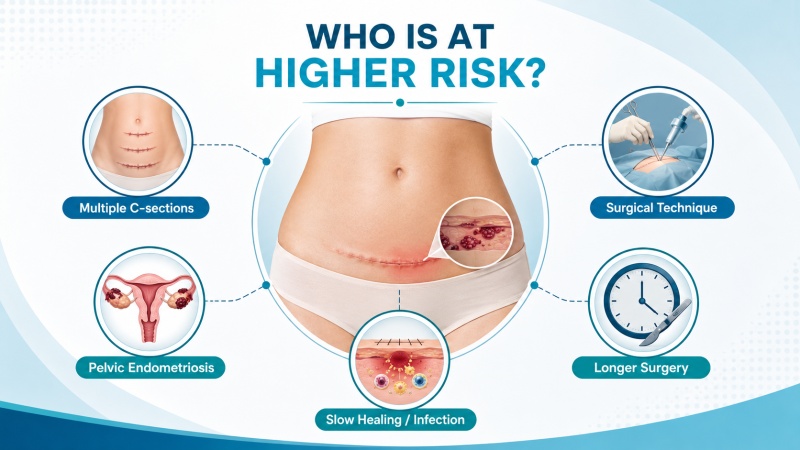
Not every woman who has a C-section will develop scar endometriosis. In our clinical experience, certain factors seem to raise the chances:
- Multiple C-sections: Each surgery is another chance for endometrial cells to get carried into the incision. Women with two or more C-sections tend to be at higher risk than those with one.
- Existing pelvic endometriosis: If endometriosis is already present in the pelvis before or during pregnancy, the cells are more likely to seed into the wound as well.
- Delayed wound healing or infection: A wound that heals slowly or gets infected creates more inflammation, which may give implanted cells a better chance to survive and grow.
- Surgical technique: How carefully the uterus and wound are cleaned before closure can make a difference. Less thorough irrigation may leave behind cells that later take hold.
- Longer surgery duration: Procedures that take longer may increase the exposure time between endometrial tissue and the open wound.
None of these factors guarantee that a woman will develop scar endometriosis, and many women with these risk factors never get it. But if you fall into one or more of these categories and notice a new lump or pain near your scar, it is worth getting it checked sooner rather than later.
Common Symptoms Women Notice After a C-Section:
A 10-year study published in the Erciyes Medical Journal in 2021 evaluated 40 women with C-section scar endometriosis. Symptoms appeared an average of 20.2 months after the C-section, although the interval before surgery ranged from 1 to 11 years.
In our practice, women may come to us with the following symptoms months or even years after a C-section.
- Pain around the C-section scar, often worse during periods
- A firm or tender lump or swelling near the scar
- Increasing tenderness around the area
- A surgical scar nodule that becomes more noticeable over time
- Occasional skin changes or bleeding over the lump
- Ongoing abdominal-wall discomfort
Read Also: Stages of Endometriosis: Symptoms, Severity & Treatment
How Doctors Identify Scar Endometriosis After a C-Section:
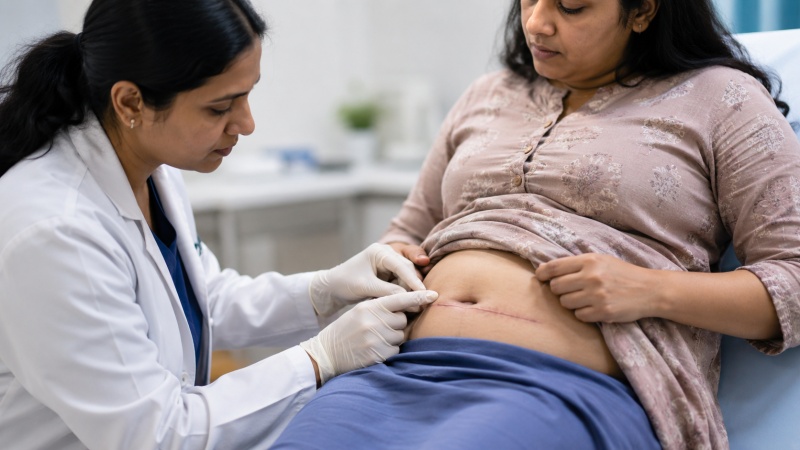
Doctors often use a simple pattern to suspect scar endometriosis even before any test is done. This is sometimes called the “classic triad”:
- A history of C-section or other abdominal surgery
- Pain that comes and goes with your periods (cyclic pain)
- A lump or mass that can be felt at or near the scar
When all three of these are present together, scar endometriosis becomes a strong possibility, and doctors will usually move quickly toward imaging or biopsy to confirm it.
“When a patient tells us her pain gets worse exactly around her period and there’s a lump at her old C-section scar, we already have a good idea of what we’re dealing with. The triad narrows things down a lot.” — Dr. Atishay Jain, Endometriosis & Gynae Laparoscopy Specialist
It’s worth noting that not every case shows all three signs clearly, especially early on. Some women may only notice mild swelling without much pain at first. This is why any new or unusual lump near a C-section scar deserves a proper check-up, even if the pain isn’t cyclic yet
How C-Section Scar Endometriosis Is Diagnosed?
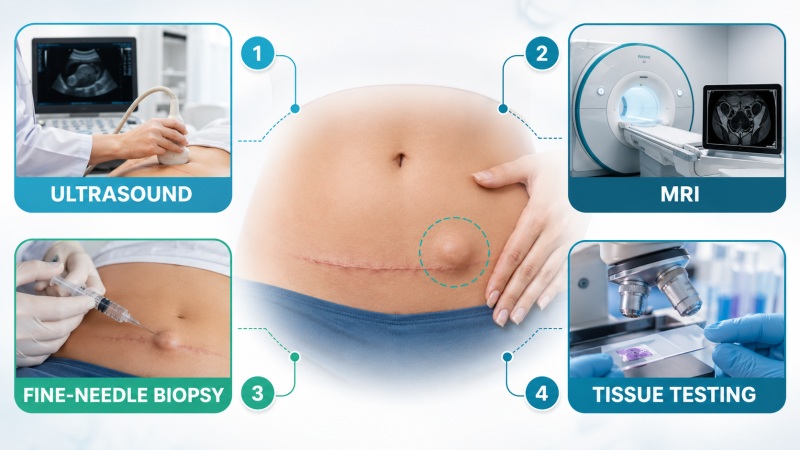
When a woman comes in with a painful lump or swelling near an old C-section scar, we first ask about her previous surgery and whether the pain changes with her menstrual cycle.
After the initial examination, we may use imaging or tissue tests to understand the lump more clearly:
- Ultrasound: It is usually done as the first procedure for diagnosing the lump.
- MRI: In case of deeper lesions or an uncertain diagnosis, the MRI may help.
- Fine-needle aspiration biopsy: A small sample is taken from the lump using a fine needle and is tested in the lab.
- Tissue testing: If the lump is removed, tissue is analyzed to confirm scar endometriosis.
Other Conditions That Can Look Like Scar Endometriosis:
A lump near a C-section scar doesn’t always mean endometriosis. Because the symptoms can overlap, this condition is often confused with other, more common problems. Here’s how they typically differ:
| Condition | How It’s Different |
| Incisional hernia | Usually gets bigger when you cough, strain, or stand for long; not linked to your period |
| Suture granuloma | A small, firm nodule that forms around leftover stitch material; doesn’t change size with your cycle |
| Abscess | Usually comes with fever, redness, and pus; develops soon after surgery, not years later |
| Hematoma | A collection of old blood under the skin, usually appears soon after surgery and settles over weeks |
| Lipoma | A soft, painless fatty lump that stays the same size regardless of your period |
| Keloid or thickened scar | Raised, firm scar tissue that is usually present from early after healing, not something that appears years later |
| Neoplasm (tumour) | Doesn’t typically follow a cyclic pattern with periods; needs biopsy to rule out |
The one clue that sets scar endometriosis apart from most of these is its cyclic behaviour — swelling, tenderness, or even slight bleeding that lines up with your menstrual cycle. If your lump doesn’t change with your period, it’s more likely to be one of the other conditions above. Either way, only an ultrasound, MRI, or biopsy can confirm what you’re dealing with.
Treatment Options for C-Section Scar Endometriosis:
We choose the following treatment based on the size and depth of the lesion and the symptoms it causes:
| Treatment | What it involves |
| Surgical excision | Deeper endometriotic tissue is removed from the C-section scar |
| Hormonal treatment | Medicines may help control pain and reduce hormone-related symptoms |
| Laparoscopic surgery | If pelvic endometriosis is also present, laparoscopy may be used to examine and treat endometriosis inside the abdomen |
Read Also: Endometriosis Treatment Cost in Indore
What to Expect After Surgery?
Most women recover well after surgical removal of scar endometriosis, and it’s usually a straightforward procedure compared to the original C-section.
What to expect:
- Hospital stay: Often a day procedure or a short one-night stay, depending on the size and depth of the lesion.
- Pain and discomfort: Mild to moderate pain at the site for a few days, managed with regular painkillers.
- Wound care: Keep the area clean and dry; your doctor will guide you on dressing changes and when stitches or staples can be removed.
- Return to routine activities: Most women can resume light daily activities within a week or two, though heavy lifting and strenuous exercise should wait longer, usually 4 to 6 weeks.
- Follow-up visit: A check-up a few weeks after surgery to confirm the wound has healed well and there’s no early sign of recurrence.
Symptoms typically improve significantly or resolve completely after the tissue is fully removed with clear margins. Some mild soreness around the healing scar is normal in the first few weeks and settles on its own.
Read Also: Endometriosis Laparoscopy: Procedure, Benefits & Recovery
Is Scar Endometriosis Dangerous?
Many women worry once they hear the word “endometriosis” connected to a growing lump. The reassuring answer is that scar endometriosis is almost always benign (non-cancerous).
In very rare cases, long-standing endometriotic tissue can undergo what doctors call malignant transformation — meaning the cells change and become cancerous. This is uncommon, but it’s one of the reasons doctors recommend removing the lesion surgically with a clear margin of healthy tissue around it, rather than just observing it or relying only on medications long-term.
A few points to keep in mind:
- Malignant transformation of scar endometriosis is rare, and most women who get it treated early never face this risk.
- A lump that is growing quickly, changing shape, or behaving unusually should always be evaluated promptly.
- Removing the tissue with adequate margins (the gold standard is at least 1 cm of healthy tissue around the lesion) not only relieves symptoms but also lowers the chance of recurrence and this rare complication.
If you’ve been told you have scar endometriosis and are feeling anxious about this, know that with timely surgical treatment, the outlook is generally very good.
Can Scar Endometriosis Be Prevented During a C-Section?
There are no definite ways of preventing scar endometriosis, but there are certain surgical considerations that could prevent it:
- Avoiding unnecessary contact between the uterus’ tissue and the wound.
- Thoroughly clean or wash the wound before closure.
- Clean the deeper portions of the wound.
These can reduce the possibility but do not prevent scar endometriosis.
A Patient Example: How It Usually Shows Up
To understand how this condition typically develops, it helps to look at a real example from clinical literature.
A 27-year-old woman, who had undergone one C-section delivery, came in with a lump on her lower abdominal scar that had been slowly growing over time. The pain around the lump followed her periods closely — worse during menstruation, easing off afterward. On examination and MRI, doctors found a mass sitting within the scar tissue, not extending into the deeper abdominal muscles. She underwent surgical removal of the lump, and lab testing of the tissue confirmed it was scar endometriosis. Six months after her surgery, she had no pain, no lump, and no sign of the condition returning.
This case is a good example of how the condition typically unfolds — a slow-growing lump, pain tied to the menstrual cycle, and a good outcome once it’s properly diagnosed and surgically treated. It’s also a reminder that the earlier this pattern is recognised, the smoother the treatment journey tends to be.
When to See a Doctor?

If you have had a C-section and notice something unusual around the old scar, don’t ignore it, especially if it keeps coming back or is getting worse.
Dr. Atishay Jain, an Endometriosis and Gynae Laparoscopy Specialist, can examine the area and help find the cause. Getting checked early can help rule out other scar problems and ensure that the right treatment is started if it is endometriosis.
Conclusion
A C-section scar may look completely healed, yet endometriosis can develop there later. The condition is uncommon, but understanding how it develops can help women recognize that a new scar-related problem may have a medical explanation. With better awareness, women can feel more confident discussing unusual changes with their doctor.
FAQs:
During a C-section, endometrial cells may accidentally reach the surgical wound and become implanted there. Over time, these cells can develop into scar endometriosis.
During surgery, endometrial tissue implantation may happen when uterine cells come into contact with the abdominal incision. These cells can remain there and respond to menstrual hormones.
Yes, a previous cesarean section can increase the possibility of scar endometriosis because endometrial cells may be transferred into the wound during surgery and later grow.
Scar endometriosis tissue can respond to estrogen and progesterone. During menstruation, the implanted tissue may swell and bleed, causing cyclic scar pain and tenderness.
Having multiple C-sections may increase the exposure of the abdominal wound to endometrial cells, which can raise the possibility of developing C-section scar endometriosis.
No. A painful scar may also result from a hernia, suture granuloma, infection or other scar problem. Cyclic pain and swelling make endometriosis more suspicious.
There is no guaranteed way to prevent it. Careful surgical techniques, including thorough cleaning of the wound, may help reduce the possibility of endometrial cell implantation.