

“Doctor, is surgery really my only option?”
I hear this question often from women who have spent months or sometimes years trying to understand why their periods hurt so much. Then comes the diagnosis of endometriosis, and naturally, the next worry is, “What happens now?”
For women in India, this is not a rare concern, endometriosis is estimated to affect around 42 million women, making the question of how to manage it especially important.
The truth is, endometriosis does not follow the same pattern in every woman. While surgery has an important role in certain cases, it is not automatically the starting point for everyone.
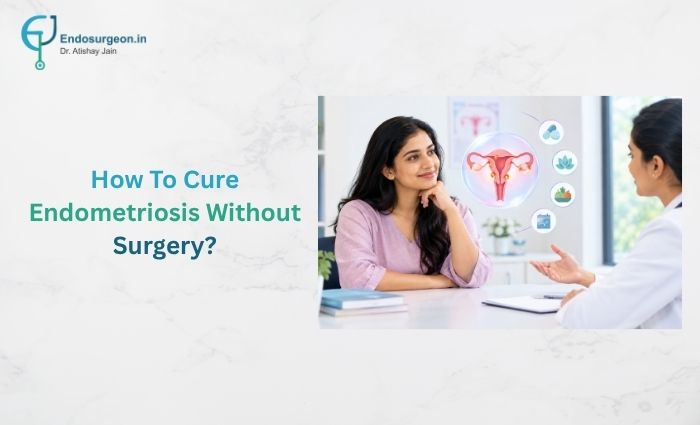
So, can endometriosis be cured without surgery?
In this guide, our Endometriosis & Gynae Laparoscopy specialist explains endometriosis treatment without surgery.
Why Doctors Don’t Always Recommend Surgery First?
When we diagnose endometriosis, we do not recommend surgery simply because the disease is present.
If you have mild endometriosis symptoms, we first start medication or hormonal therapy to manage pain. If there is no clear purpose, surgery cannot be recommended because it can involve recovery and also potential risks.
- Ovarian surgery, particularly for endometriomas, can reduce ovarian reserve. A 2024 study found an average AMH decline of about 1.08 ng/mL after surgery to remove an ovarian endometriotic cyst.
- Sometimes, endometriomas can also recur after surgery. A 2024 study reporting recurrence of up to 27% by 24 months without postoperative hormonal treatment.
This does not mean surgery should be avoided. When needed, it can be an important part of endometriosis treatment, depending on your individual condition.
So, how to cure endometriosis without surgery?
Let’s understand what non-surgical care can offer.
Read Also: Understanding Endometriosis: Symptoms, Causes, and Treatment
Medication and Pain Management Options:
When endometriosis pain starts interfering with your routine, pain relief is an important part of treatment. You do not have to simply “bear with” severe period pain.
In a multicentre study involving 1,418 women, those with endometriosis reported an average loss of 10.8 hours of work per week, with pelvic pain being an important contributor. This is why managing pain early is an important part of treatment.
NSAIDs, such as ibuprofen or naproxen, may be prescribed to help with period-related and pelvic pain, especially during a painful flare-up.
Hormonal Therapy to Control Endometriosis Growth:
Endometriosis is influenced by estrogen, which can stimulate endometriosis tissue and contribute to pain. That is the reason why hormonal therapy can play an important role in endometriosis management.
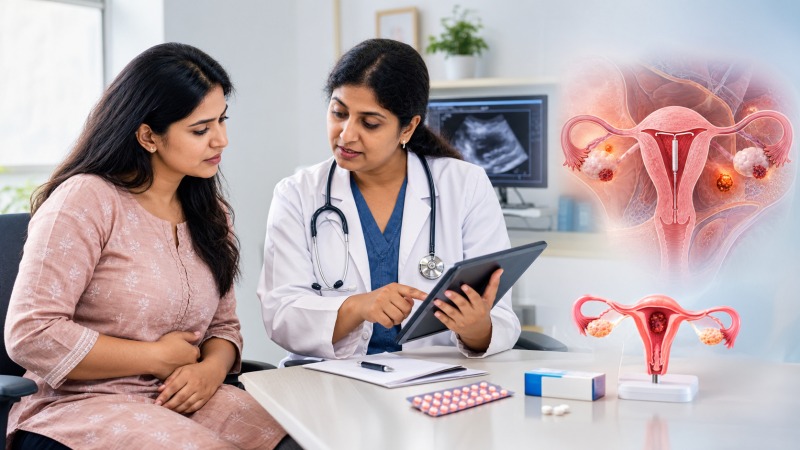
Based on your symptoms as well as whether you are planning pregnancy, we may recommend:
- Oral contraceptives (birth control pills)
- Progestins
- Hormonal IUD
Hormonal therapy can help decrease the size of endometriomas on the ovaries.
According to a 2024 review, there was a 55% reduction in volume of endometriomas within six months after treatment.
“Hormonal therapy cannot cure endometriosis permanently and cannot be given while trying to conceive. So, it is important to discuss your pregnancy plans with your doctor before starting hormonal treatment.”
- Dr Atishay Jain, Endometriosis & Gynae Laparoscopy Specialist
Hormone-Blocking Injections: A Stronger Option for Severe Pain
When endometriosis pain remains difficult to control, GnRH agonists may be considered as a stronger hormonal treatment.
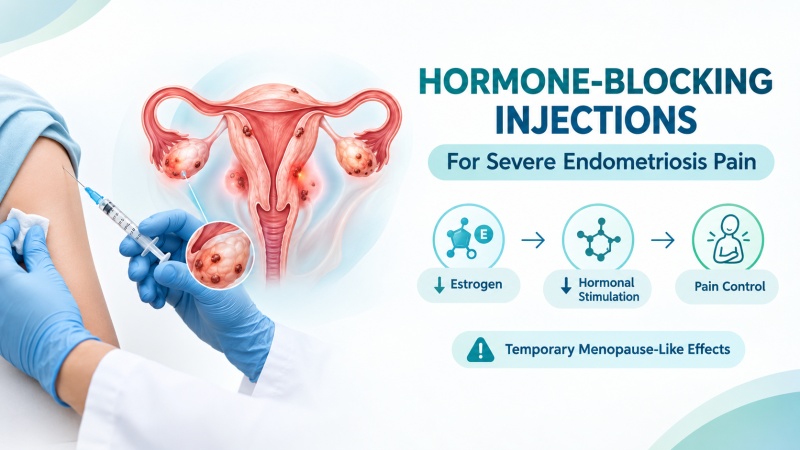
These medicines:
- Temporarily suppress your ovarian hormone production
- Lowering estrogen levels
- Reducing hormonal stimulation of endometriosis tissue
These medicines are mainly given when your symptoms are significant or when other hormonal treatments have not provided you enough relief.
However, they are not suitable for everyone. Because they can cause temporary menopause-like effects, such as:
- Hot flashes
- Vaginal dryness
- Bone loss
Depending on the medicine and duration of treatment, we may also give a small amount of hormone treatment alongside these injections to help reduce these effects.
Read Also: Stages of Endometriosis: Symptoms, Severity & Treatment
Pelvic Floor Physical Therapy for Pain Relief:
“Doctor, why does it still hurt when my endometriosis is being treated?”
Sometimes, the answer lies partly in the pelvic floor muscles. Ongoing pelvic pain can make these muscles tight or overactive, adding to discomfort during intercourse, bowel movements, or prolonged sitting.
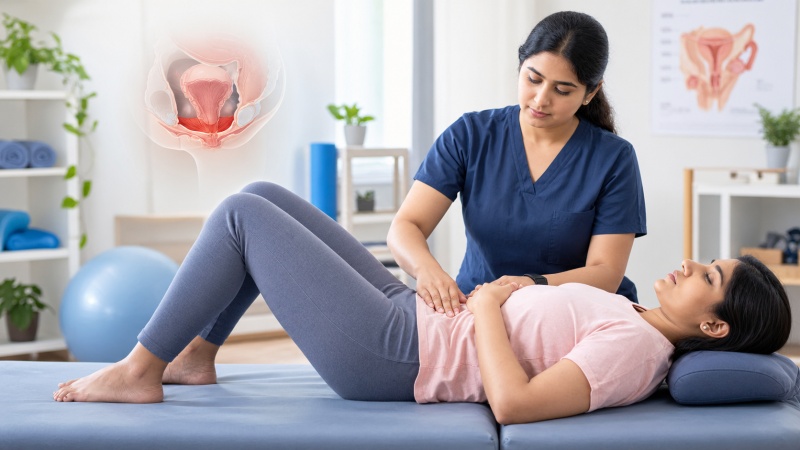
In such cases, we may suggest pelvic floor physiotherapy. A physiotherapist may first check your muscle tension and guide you in breathing techniques, relaxation techniques, stretching and other personalized exercise.
This therapy can be useful in endometriosis pain relief without surgery, particularly when pelvic muscle tension is contributing to your pain.
Anti-Inflammatory Diet and Lifestyle Changes:
Endometriosis involves chronic inflammation, so managing endometriosis naturally may be a useful supportive approach.
We usually suggest:
- Eat more plants-based food such as vegetables, fruits, leafy greens, dal and whole grains.
- Take healthy fats such as flaxseeds, chia seeds and walnuts.
- Limit processed foods like deep-fried foods, processed meats and excess sugar.
- Stay hydrated and notice foods that worsen bloating.
A 2024 review of 11 trials involving 716 women found promising improvements in endometriosis-related pain.
How Exercise Can Ease Endometriosis Pain?
Exercise is one way to manage endometriosis-related pain.
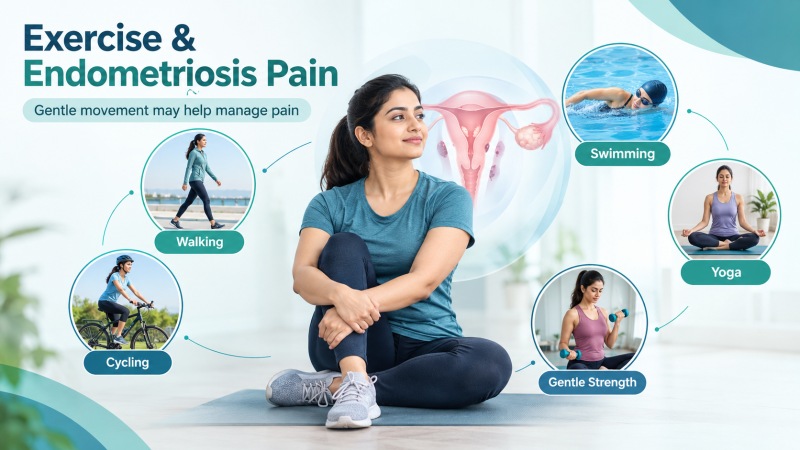
We may recommend following exercise:
- Walking
- Swimming
- Cycling
- Yoga
- Gentle strength training
According to a 2025 study which included 6 trials involving 251 women found that exercise may improve pain and quality of life.
Note: You don’t need intense exercise. Consistency is better than intensity, especially when experiencing pain flare-ups.
Home Remedies: Heat Therapy and Self-Care
Some easy self-care steps can make painful days easier.
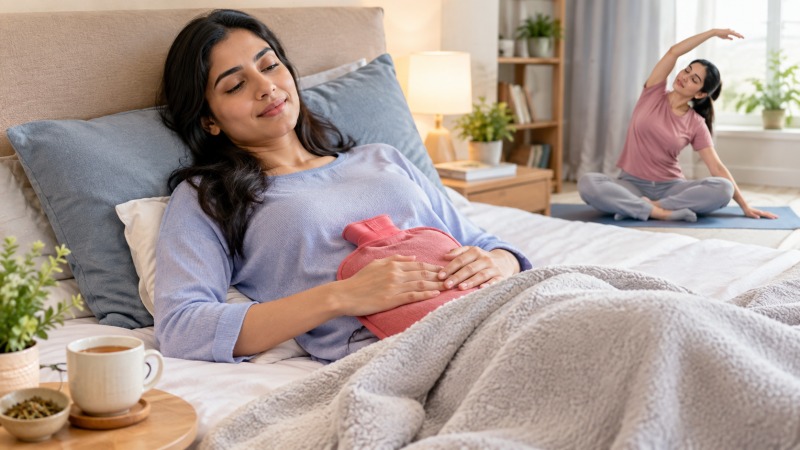
Try to:
- Use of a heating pad or hot water bottle with warm temperature in the part of the abdomen or back
- A warm bath, light stretches, proper sleep, and adequate rest on tough days may be beneficial.
- Maintaining a record of your menstrual cycle and symptoms is important because it may help you to recognize some patterns and avoid difficult days.
Acupuncture and Other Natural Therapies Worth Trying:
Acupuncture involves placing very thin needles at specific points on the body. It may help with endometriosis pain by stimulating your nervous system and encouraging the release of the body’s natural pain-relieving chemicals, such as endorphins.
A 2024 review of 14 studies involving 793 women found that acupuncture was associated with a significant reduction in endometriosis-related pain. The review reported a 25% higher response rate compared with control treatments, although the researchers noted limitations in the quality of the available evidence.
It may be considered as a complementary approach for pain management, but it should not replace medical treatment or be considered a cure for endometriosis.
When Non-Surgical Treatment Isn’t Enough?
Non-surgical treatment for endometriosis can control symptoms for many women, but sometimes it may not provide enough relief.
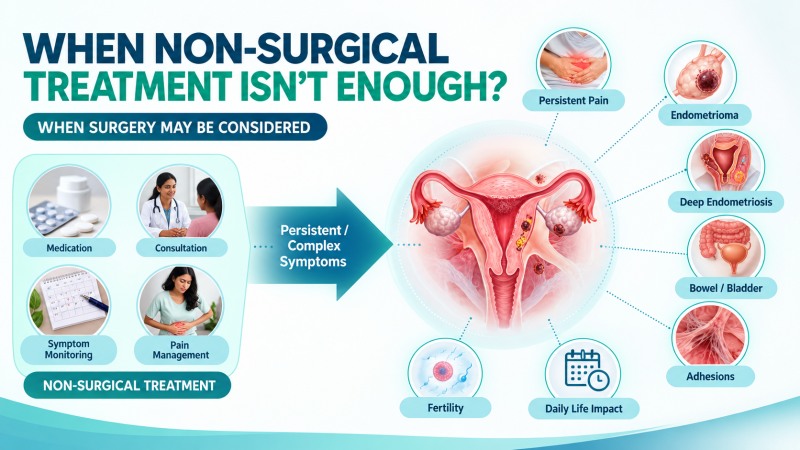
As a doctor, I may discuss surgery when:
- Pain continues or worsens despite appropriate medical treatment.
- A large or painful endometrioma is present.
- Deep infiltrating endometriosis is suspected.
- Endometriosis affects the bowel, bladder or ureters.
- Significant adhesions are causing symptoms.
- Fertility is affected and surgery may offer a potential benefit.
- Symptoms are significantly interfering with your daily life.
Read Also: Does Endometriosis Affect Pregnancy and Fertility? Everything You Need to Know
Finding the Right Non-Surgical Plan for You:
Endometriosis care should not be based on a scan alone. The same condition can cause very different symptoms, so your pain, disease location, age, fertility plans and response to treatment all matter. Non-surgical options can provide meaningful symptom control for some women, but regular follow-up remains important. If your usual treatment stops helping, reassessment is better than increasing medicines yourself.
If you are looking for an endometriosis surgeon, Dr. Atishay Jain provides personalized endometriosis and fertility care, with medical and laparoscopic options when appropriate.
Frequently Asked Questions:
Endometriosis cannot usually be permanently cured without surgery, but non-surgical endometriosis treatment can control pain, reduce symptoms and improve daily life for many women.
Doctors may use medication, hormonal therapy, pain management, pelvic floor physiotherapy, exercise and lifestyle changes depending on your symptoms, disease location and pregnancy plans.
Yes, medicines such as NSAIDs may provide endometriosis pain relief during painful periods and flare-ups, but they should be taken according to your doctor’s advice.
Hormonal therapy can help control endometriosis growth and symptoms by reducing hormonal stimulation, but it does not permanently remove endometriosis lesions from the body.
A balanced diet with vegetables, fruits, whole grains, dal, nuts and healthy fats may support overall health and may help some women manage inflammation and bloating.
Regular walking, swimming, cycling, yoga and gentle strength training may support endometriosis pain management and improve quality of life without putting excessive strain on the body.
Yes, endometriosis symptoms can return after stopping treatment because medicines usually control symptoms rather than permanently removing endometriosis lesions from the body.