

The moment your periods become the dictator of what you can do and what you shouldn’t, dismissing it as just a “mood swing” will be harder. You often end up canceling plans, all due to the worsening cramps or the unusually heavy bleeding. At times, you may also feel a sharp, shooting pain in your pelvic region even after your period ends.
Symptoms like these shouldn’t ever be treated as a side effect of the hormonal changes your body goes through during the menstrual cycle. This is why understanding adenomyosis vs endometriosis is so crucial, given how either of these can be the underlying cause of your period struggles. Let’s explore this further here!
Difference between adenomyosis and endometriosis
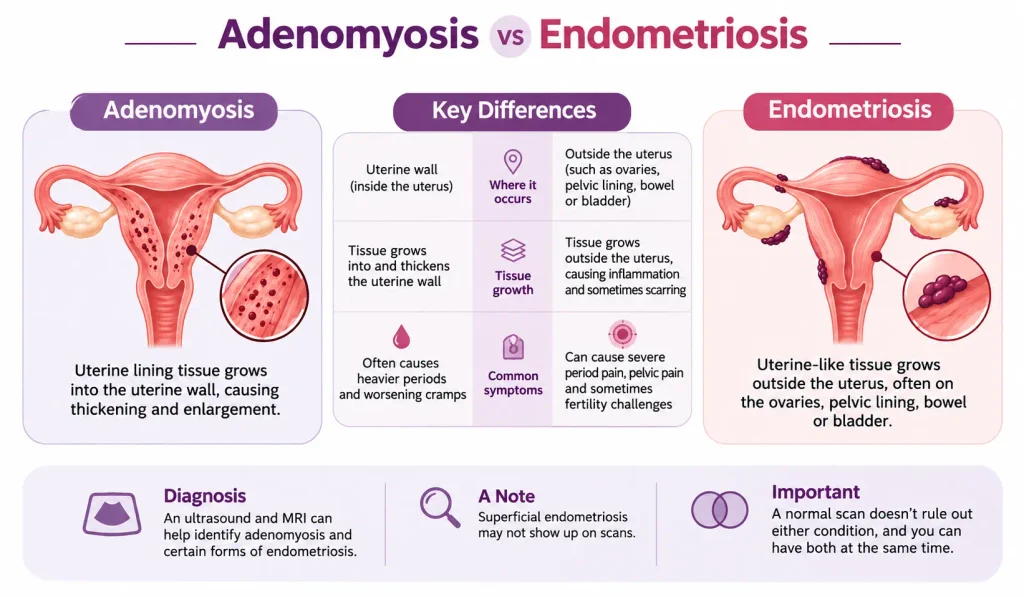
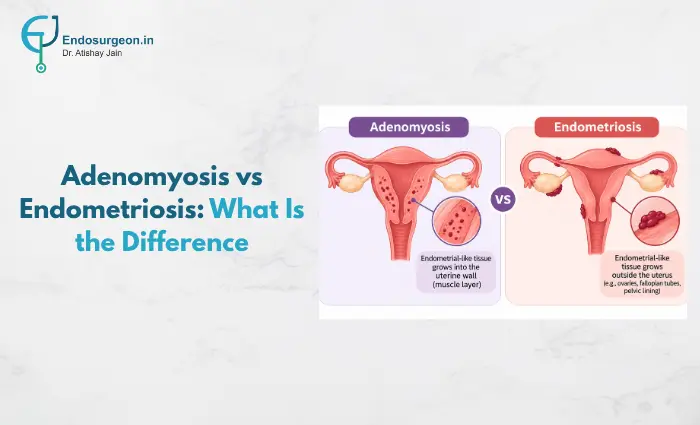
Two people can struggle with debilitating period pain for entirely different reasons. With adenomyosis, epithelial tissue grows into your uterine wall, causing enlargement and tenderness. That’s what causes unusually heavy bleeding and worsening period cramps.
As for endometriosis, it affects your organs like the ovaries, pelvic lining, bowel, or your bladder. The lesions often grow to a point where they cause internal tissue inflammation and, in some cases, scarring too.
The World Health Organization describes endometriosis as a disease where tissue similar to the lining of the uterus grows outside it, causing pain and/or infertility.
For a broader overview of the condition, you can read about endometriosis symptoms, causes and treatment.
It’s this fundamental anatomy-based distinction that allows gynecologists to recommend an ultrasound and MRI to identify adenomyosis and certain forms of endometriosis. However, superficial endometriosis can escape detection.
There’s a catch though! Neither condition should be ruled out simply because your scan appears normal, and you can have both conditions at the same time.
Adenomyosis vs endometriosis symptoms
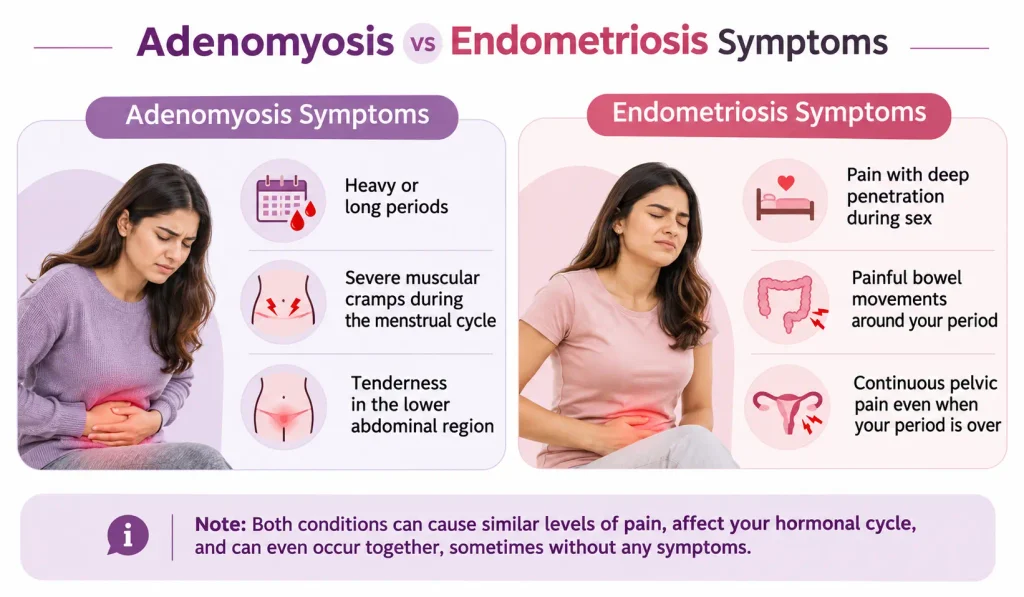
If you are experiencing periods that leave you feeling very tired, in severe pain, or causing you to check how heavy they are, it’s worth knowing about the pattern of your symptoms. Adenomyosis is accompanied by:
- Heavy or long periods
- Severe muscular cramps during the menstrual cycle
- A feeling of tenderness surrounding the lower abdominal region
Endometriosis can present differently. In addition to period cramps, you may have:
- Pain with deep penetration during sex
- Painful bowel movements around your period
- Continuous pelvic pain even when your menstruation is over
When lesions grow on the intestine or urinary tract, they are known as bowel endometriosis or bladder endometriosis.
The challenge here is to conclude which disease you are suffering from by just considering the symptoms. Both can cause a similar level of pain or affect your regular hormonal cycle. What’s worse is that sometimes, they can occur simultaneously and remain asymptomatic.
In some women the disease causes very few signs, which is often described as silent endometriosis.
Adenomyosis and endometriosis: How these are diagnosed?
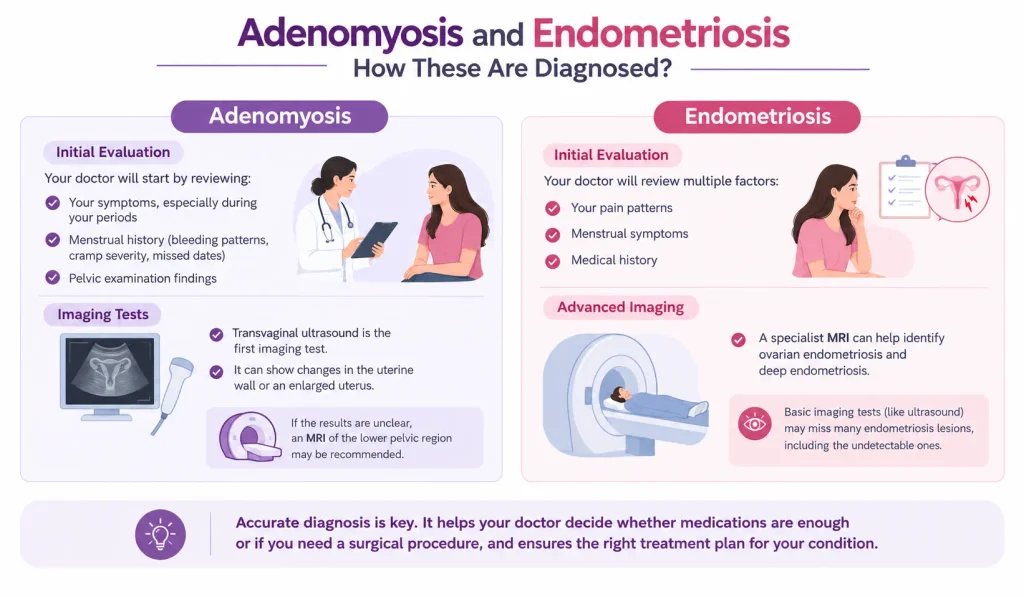
Before you decide whether medications will be enough or you need to undergo any surgical procedure, it’s important your condition gets diagnosed accurately. Only then it will become possible for appropriate clinical staging and finding the safest and best-fit treatment plan. Adenomyosis is usually flagged by symptoms like unusually heavy bleeding and worsening cramps during your menstrual cycle. That’s why your doctor will start the diagnosis by:
- Reviewing your symptoms, especially during your periods
- Menstrual history, like bleeding patterns, cramp severity, missed dates
- Pelvic examination findings
Transvaginal ultrasound is performed as a preliminary imaging test. The results usually reveal if there are any abrupt changes in your uterine wall anatomy or the uterus has enlarged in size. In case the findings are unclear, your doctor can recommend going for an MRI of the lower pelvic region.
As endometriosis involves multiple lesions, often the undetectable ones, basic imaging tests will do little to almost no good in detecting the situation. That’s why gynecologists prefer reviewing multiple factors at the beginning, including:
- Your pain patterns
- Menstrual symptoms
- Medical history
Only a specialist MRI can help them identify ovarian endometriosis and deep endometriosis.
After diagnosis, the stages of endometriosis describe how widespread the disease is and help guide treatment. If imaging is inconclusive, this guide to understanding endometriosis laparoscopy explains how laparoscopy helps confirm the diagnosis.
Adenomyosis and endometriosis fertility: What to expect
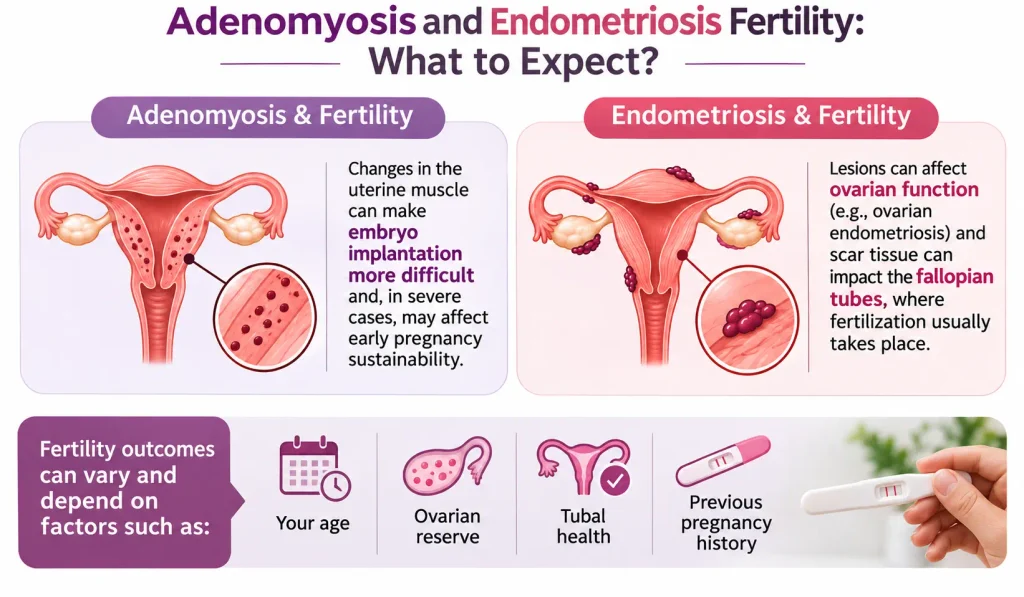
Truth be told, even the feeling of conceiving can start feeling utterly frustrating when your monthly cycles are downright defined by extreme pain and unusually heavy bleeding. When we talk about endometriosis, fertility challenges depend on where lesions have developed outside the uterus and the extent to which your reproductive organs get affected.
Take the example of ovarian endometriosis. It usually leaves the ovarian function compromised. On the other hand, scar tissue can impact the fallopian tubes where fertilization usually takes place. You can read more about how endometriosis affects pregnancy and fertility in this detailed guide.
As for adenomyosis, the challenge is entirely different. With the uterine muscles differing in anatomy, embryo implantation might fail. In severe cases, it can also make affect your body’s natural ability to sustain an early pregnancy. Although the impacts are prominent, they do not always define whether you can conceive naturally or not. Rather, it depends on factors like:
- Your age
- Ovarian reserve
- Tubal health
- Previous pregnancy history
Adenomyosis and endometriosis treatment: How it differs
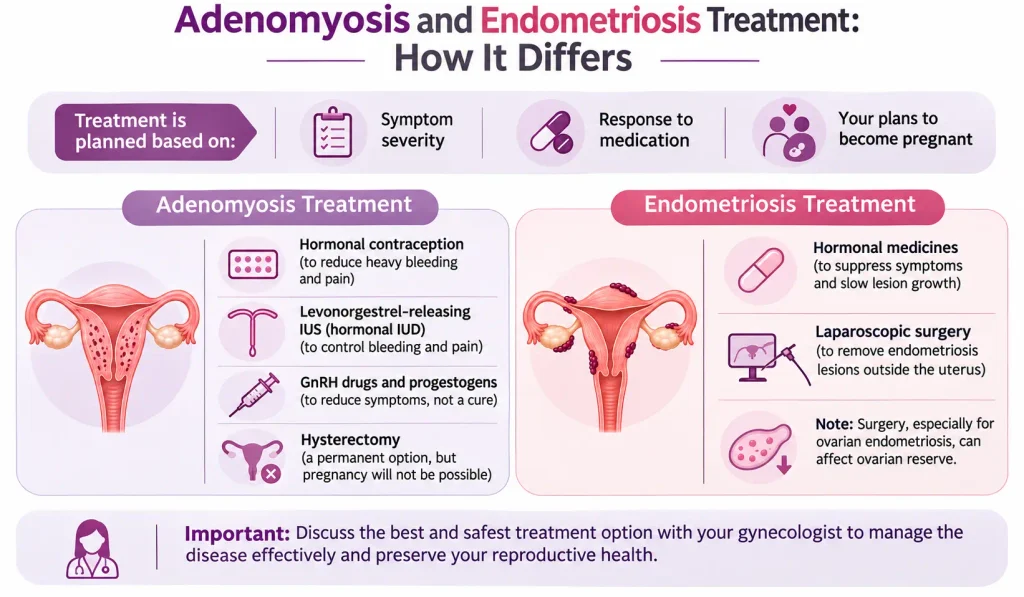
With multiple approaches now clinically proven and available, your gynecologist will factor in the following details before deciding which treatment pathway will be best and safe for your condition:
- Symptom severity
- Response to medication
- Your plans to become pregnant
Hormonal contraception or the levonorgestrel-releasing intrauterine system can be useful in helping reduce the heavy bleeding and excessive pain associated with adenomyosis. GnRH drugs and progestogens can also be used, although GnRH drugs can sometimes cause menopausal symptoms and bone loss. These drugs are only used to help reduce symptoms of adenomyosis; they are not used to treat the cause of the problem. A hysterectomy would be the best permanent option but would result in your body being unable to conceive.
Endometriosis treatment also involves administering hormonal medicines that suppress the symptoms. But in case you have developed lesions outside the uterus, your doctor might suggest undergoing laparoscopic surgery. One thing to note here is that a surgical approach, especially for treating ovarian endometriosis, can impact your reproductive health, such as ovarian reserve. That’s why you must discuss the best and safest method that will address the disease and preserve your body’s reproductive health simultaneously with your doctor.
Can you have adenomyosis and endometriosis together?
You can have both of these conditions at the same time, which can make diagnosing them a bit more complicated. You could have heavy periods due to adenomyosis and pain during intercourse or bowel movements due to endometriosis. However, neither of these symptoms is diagnostic. Your gynaecologist may suggest some imaging and investigations to see if you have both conditions, especially if your symptoms aren’t improving with treatment for one condition.
When to see a doctor?
Don’t ignore recurring period pain. Make an appointment with a gynaecologist if you are having:
- Increasing heavy bleeding
- Ongoing pelvic pain
- Pain with sex
- Painful bowel movements
Keep an eye out for symptoms. If your pain flares up suddenly or is very severe, or if you’re feeling very tired during periods as a result of heavy bleeding, seek help from a professional. This will help you identify whether there is a lesion, change in your uterus or hormone imbalance.
Why choose Dr Atishay Jain for adenomyosis and endometriosis treatment?

If you are experiencing pain in the pelvis or heavy periods, then it is important to plan out a treatment strategy. Dr Atishay Jain is an Obstetrician Gynaecologist, Fertility Specialist, and Advanced Laparoscopic Gynaecologist practicing in Indore with special training in Endometriosis and Minimally Invasive Surgery.
He evaluates your condition and discusses various treatment options, including medical and surgical management. He also discusses your fertility goals. Under his professional guidance, you will surely not have to worry about managing your symptoms, chances of conception, and your fertility journey overall.
Conclusion
Your fertility plans should never come to a standstill even when you suffer from chronic pelvic pain or heavy periods. As the symptoms of adenomyosis and endometriosis can be similar, it is important to seek specialist gynaecology opinion so that you know what treatment you may need. This will help you make an informed decision about how best to reduce your symptoms and will also give you an understanding of your future fertility.
FAQs
Both can cause severe pain, and it varies from person to person, so neither is reliably worse. Adenomyosis tends to cause deep uterine cramps with heavy bleeding. Endometriosis often causes pelvic pain that continues outside your period and may include pain during sex or bowel movements. Having both can add to the burden.
No. They are separate conditions and one does not turn into the other. They often occur together, which can make it feel as though one has changed into the other.
Yes. Having both can make diagnosis more complicated, since symptoms like heavy periods and pain during sex or bowel movements aren’t diagnostic on their own. Your gynaecologist may suggest further imaging if symptoms don’t improve with treatment for one condition.
See a gynaecologist if you have increasing heavy bleeding, ongoing pelvic pain, pain with sex or painful bowel movements. Seek help sooner if the pain flares suddenly or is severe, or if heavy bleeding leaves you very tired.
Yes. Many women with these conditions conceive naturally. However, the chances depend on factors such as age, ovarian reserve, fallopian tube health, disease involvement, and previous pregnancy history. Fertility evaluation can help determine whether additional treatment is needed.
A transvaginal ultrasound can identify many features of adenomyosis and certain types of endometriosis, including ovarian endometriomas. However, superficial endometriosis lesions may not be visible. MRI may be recommended when further assessment is needed.